



What's Happening?
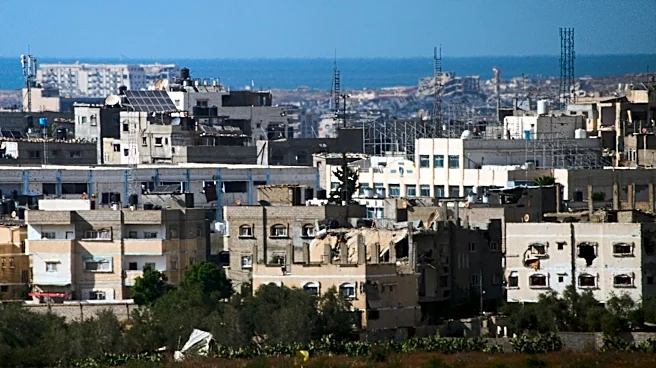
The Portland Trust, a London-based nonprofit, has conducted an analysis of over 30 reconstruction proposals for the Gaza Strip, following the significant damage caused by the conflict initiated by Hamas's attack on October 7, 2023. The analysis reveals
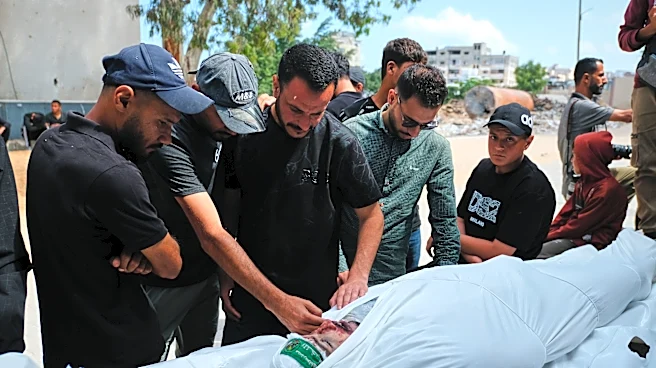
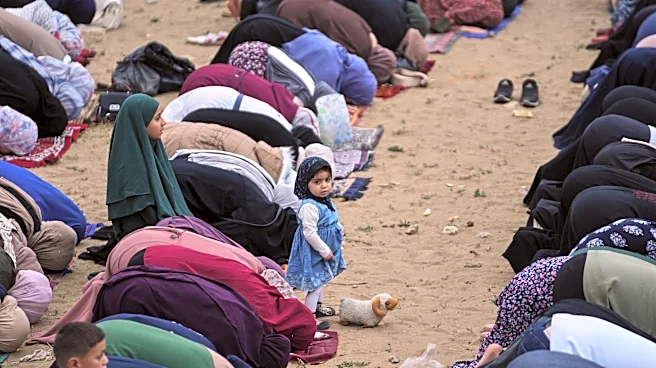
diverse visions for Gaza's urban and economic future. Some organizations, like the United Nations Development Program (UNDP) and the Arab League, focus on restoring housing to pre-war conditions, prioritizing the return of displaced residents. Others, such as RAND and Connected Gaza, propose improved spatial organization and expanded transport networks. Meanwhile, the Board of Peace suggests new residential complexes alongside tourism and development zones. The reconstruction efforts are complicated by a severe sanitation crisis, with 1.9 million Palestinians displaced and facing health risks due to inadequate infrastructure. The World Health Organization reported 17,000 pest-related infections in the past year, prompting emergency interventions.
Why It's Important?
The reconstruction of Gaza is crucial not only for the immediate humanitarian needs but also for the long-term stability and economic recovery of the region. The diverse proposals reflect different priorities, from rapid recovery to long-term urban redesign. The focus on sanitation and infrastructure is vital to prevent health crises and enable displaced residents to return home. The economic models proposed range from subsistence-based to investment-oriented, highlighting the need for a sustainable economic framework. The success of these plans depends heavily on international support and financing, which remains uncertain. The lack of transparency and long-term fiscal sustainability in many proposals poses significant challenges.
What's Next?
The next steps involve securing international funding and support for the chosen reconstruction plans. Stakeholders, including international donors and Palestinian authorities, must coordinate to ensure effective implementation. The focus will likely be on balancing immediate humanitarian needs with long-term development goals. The ongoing sanitation crisis requires urgent attention to prevent further health issues. The success of the reconstruction efforts will depend on the ability to mobilize resources and implement sustainable economic and infrastructure solutions.
Beyond the Headlines
The reconstruction of Gaza presents an opportunity to address long-standing issues of urban planning and economic development. The proposals highlight the potential for innovative solutions, such as decentralized, renewable infrastructure. However, the political and economic complexities of the region pose significant challenges. The involvement of international organizations and the Palestinian diaspora could play a crucial role in shaping the future of Gaza. The reconstruction efforts also raise ethical questions about the prioritization of resources and the role of external actors in the region's development.