








What's Happening?
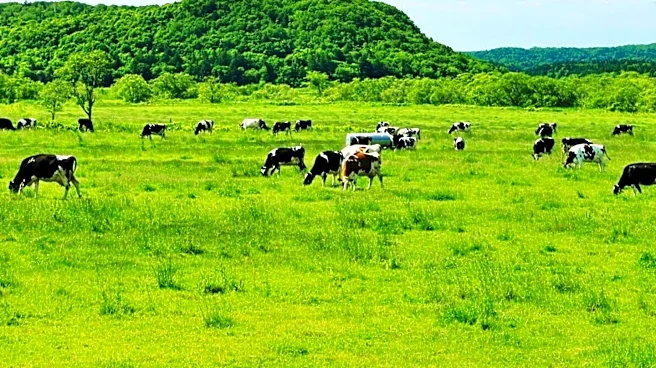
The University of Arkansas Division of Agriculture is emphasizing rotational grazing as a key practice for maintaining forage during drought conditions. Kenny Simon, an extension forages instructor, stated that best management practices (BMPs) are even
more critical when forage supply is limited. This year's prolonged drought has severely impacted pastures and hay meadows across Arkansas. Simon advises confining livestock to one field at a time and feeding hay, noting that hay provides nutrients for both animals and the soil. He also recommends moving the hay feeding spot each time a new bale is put out and rotating through fields, starting in lower parts of the farm while dry and moving to higher ground. Additionally, there is still time to plant winter annuals like ryegrass or small grains such as wheat, cereal rye, oats, or triticale for late winter and early spring grazing.
Why It's Important?
This guidance is crucial for U.S. agricultural stakeholders, particularly cattle ranchers in drought-prone regions, as it provides actionable strategies to mitigate the economic and environmental impacts of drought. Droughts can lead to significant financial losses for farmers due to reduced forage availability, increased feed costs, and potential herd reductions. Implementing rotational grazing and strategic hay feeding can help preserve existing forage, improve soil health, and ensure the nutritional needs of livestock are met. The recommendation to plant winter annuals offers a proactive measure to secure future forage supplies, which is vital for maintaining herd health and productivity. These practices contribute to the resilience of the agricultural sector against climate variability, safeguarding food production and rural economies.
What's Next?
Kenny Simon and other experts will discuss drought management and recovery strategies at the Arkansas Forage and Grassland Fall Conference on October 30. This event will provide further insights and practical advice for farmers dealing with drought conditions. Farmers are encouraged to plant winter annuals by October 31 for optimal late winter and early spring grazing, though planting by mid-November can still yield some early spring grazing. The University of Arkansas Division of Agriculture will continue to offer resources and extension programs to support farmers in adopting best practices for drought resilience. These ongoing efforts aim to equip farmers with the knowledge and tools necessary to adapt to changing environmental conditions and maintain sustainable agricultural operations.
Beyond the Headlines
The emphasis on drought-resilient farming practices highlights a broader shift towards sustainable agriculture in the face of climate change. Beyond immediate economic benefits, these practices contribute to long-term ecological health by improving soil structure, water retention, and biodiversity. Rotational grazing, for instance, can enhance carbon sequestration in soils, playing a role in climate change mitigation. The educational initiatives by institutions like the University of Arkansas Division of Agriculture underscore the importance of scientific research and extension services in translating knowledge into practical solutions for farmers. This proactive approach to agricultural management is essential for ensuring food security and environmental stewardship in a future marked by increasing climate volatility.