
What's Happening?
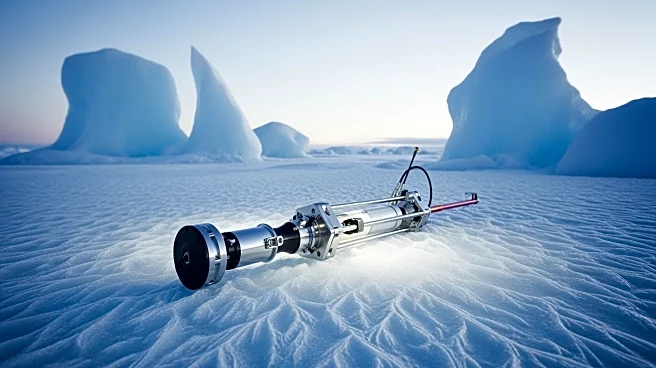
A robotic ocean float, initially deployed to survey the waters around Antarctica's Totten Glacier, resurfaced after being lost for nine months beneath ice shelves. During its time adrift, the float collected
valuable temperature and salinity data from the ocean floor to the ice shelf base, despite GPS communication issues. This data has provided new insights into the stability of Antarctica's glaciers, revealing that while the Shackleton ice shelf appears less vulnerable, the Denman Glacier is highly susceptible to melting. The findings underscore the potential for irreversible ice melt and sea-level rise if glacier retreat continues.
Why It's Important?
The data collected by the ocean float is crucial for understanding the dynamics of glacier melt and its contribution to global sea-level rise. As glaciers in Antarctica melt, they contribute to rising sea levels, which can lead to increased coastal flooding, infrastructure damage, and habitat loss worldwide. The study highlights the fragility of key glaciers and the potential long-term impacts on global sea levels. This research emphasizes the need for continued monitoring and action to mitigate the effects of climate change, as the consequences of glacier melt extend far beyond the polar regions.
What's Next?
The findings from the recovered ocean float are likely to prompt further research into the stability of Antarctic glaciers and their impact on global sea levels. Scientists may focus on improving data collection methods and enhancing predictive models to better understand future changes. Additionally, the study could influence policy decisions related to climate change mitigation and adaptation strategies, as governments and organizations seek to address the challenges posed by rising sea levels and their associated impacts.