




What's Happening?
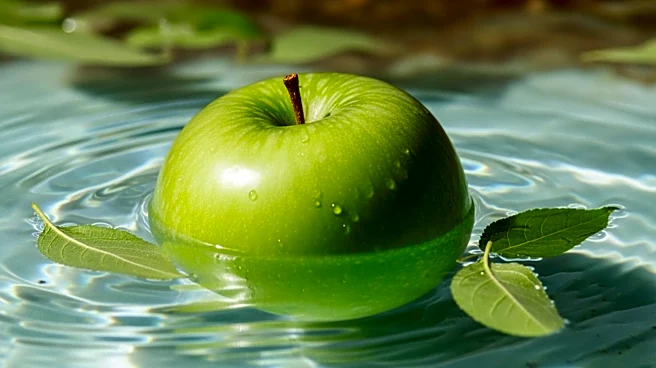
Researchers at the University of British Columbia have developed a biodegradable wash that effectively removes over 85% of surface pesticide residues from fruits like apples and forms a thin coating to reduce water loss and spoilage. The wash is composed
of starch nanoparticles, tannic acid, and iron, which together create a structure that interacts with pesticide molecules on the fruit's surface, aiding in their removal. This innovation addresses the dual concerns of pesticide residue and fruit spoilage, offering a potential solution to reduce food waste and extend the shelf life of produce. The study highlights that while the wash is effective on surface residues, it does not eliminate pesticides that have penetrated the fruit's tissue during growth.
Why It's Important?
The development of this biodegradable wash is significant as it offers a dual-function solution to common issues faced by consumers and the food industry: pesticide residue and fruit spoilage. By effectively removing surface pesticides and extending the freshness of produce, this wash could reduce food waste, a major global issue with approximately one-quarter of fruits and vegetables lost annually. The innovation could benefit consumers by providing safer, longer-lasting produce and potentially reduce the environmental impact of food waste. Additionally, the wash's cost-effectiveness, estimated at less than $0.032 per apple, makes it a viable option for post-harvest processing facilities, which could implement it to improve the quality and safety of produce before it reaches consumers.
What's Next?
The researchers are working on developing a household spray formulation of the wash for consumer use, although its immediate application is more suited to post-harvest processing plants where washing conditions can be controlled. Further testing is needed on a wider range of fruits and vegetables under commercial conditions, and the wash must undergo regulatory approval before it can be widely used. If successful, this innovation could lead to a shift in how produce is processed and preserved, potentially influencing industry standards and consumer practices regarding fruit and vegetable handling.