







What's Happening?
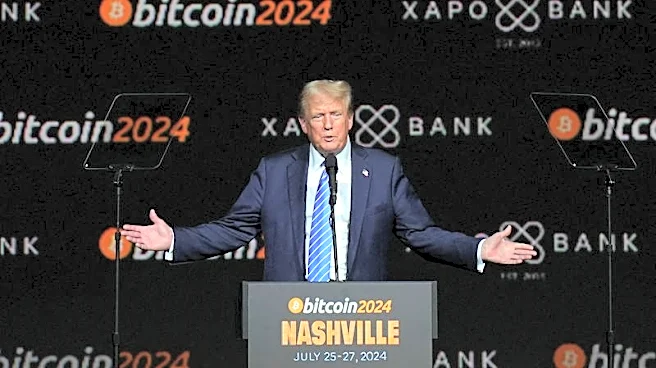
President Trump has reportedly earned at least $2.2 billion during his first year back in the White House, with a significant portion, approximately $1.4 billion, coming from his family's cryptocurrency ventures. This financial disclosure, highlighted
by The New York Times, places Trump in a category of wealth accumulation more commonly associated with autocratic leaders. The scale of these earnings is unprecedented for a leader of a liberal democracy, raising concerns about potential conflicts of interest, especially given Trump's regulatory oversight of the cryptocurrency industry. The White House has denied any conflicts, and Trump has stated that he does not manage his financial affairs directly.
Why It's Important?
The magnitude of President Trump's earnings while in office challenges traditional norms of financial transparency and conflict of interest management in the U.S. The situation has implications for the country's global standing in anti-corruption efforts and financial regulation. Experts suggest that Trump's financial activities could undermine international norms and set a precedent that may embolden other leaders to engage in similar practices without fear of repercussions. This development could weaken the U.S.'s ability to advocate for ethical governance worldwide, as it may be perceived as not adhering to the standards it promotes.
What's Next?
The ongoing scrutiny of President Trump's financial dealings is likely to continue, with potential implications for U.S. domestic and foreign policy. Political and public reactions may influence future regulatory measures concerning presidential financial disclosures and conflict of interest laws. The situation may also impact voter perceptions and trust in political institutions, particularly in a polarized political climate where allegations against leaders are often viewed through a partisan lens.
Beyond the Headlines
The broader implications of President Trump's financial disclosures extend to the ethical and cultural dimensions of political leadership. The normalization of significant personal wealth accumulation by a sitting president could shift public expectations and tolerance for similar behavior in future leaders. This development may also influence the political landscape, where financial success is increasingly intertwined with political power, potentially altering the dynamics of political accountability and transparency.