





What's Happening?
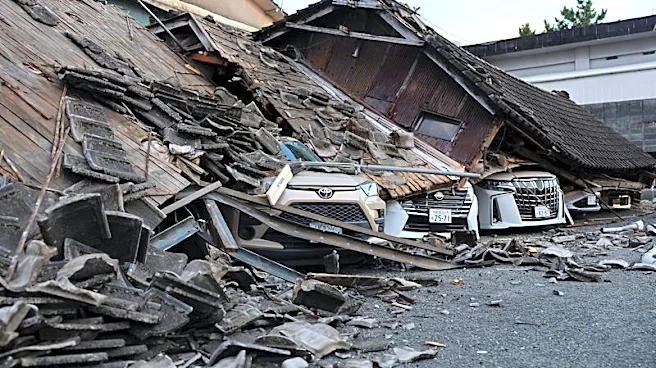
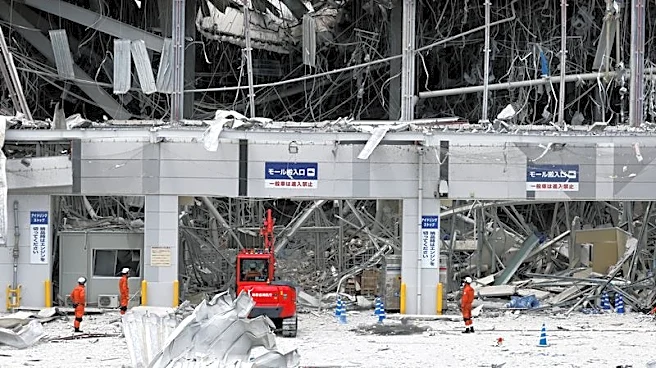
A 7.1-magnitude earthquake struck southern Japan, causing significant disruptions to the region's automotive and semiconductor industries. The quake resulted in the temporary shutdown of several factories, including those of major companies like Toyota,
Nissan, and Mitsubishi Motors. The earthquake has claimed 34 lives, with many deaths occurring in commercial facilities. The Japanese trade ministry has instructed gas operators to inspect equipment due to potential aftershocks. Despite the disruptions, companies like Sony and Tokyo Electron are working to resume operations, highlighting the resilience measures implemented since a similar disaster in 2016.
Why It's Important?
The earthquake's impact on Japan's manufacturing sector underscores the vulnerability of global supply chains to natural disasters. Japan is a critical hub for automotive and semiconductor production, and any prolonged disruption could have ripple effects on global markets. The situation tests the effectiveness of resilience measures adopted by manufacturers in response to past disasters. The potential delay in semiconductor production is particularly concerning given the ongoing global chip shortage, which could exacerbate supply issues for various industries reliant on these components.
What's Next?
Manufacturers are assessing the damage and working to resume operations as quickly as possible. The focus will be on ensuring safety and quality before full production can restart. The Japanese government and companies will likely review and enhance their disaster preparedness strategies to mitigate future risks. The situation may prompt a reevaluation of supply chain strategies, including diversification and increased stockpiling of critical components to buffer against similar disruptions.