
What's Happening?
Mike Rogers, the Republican candidate for Michigan's open U.S. Senate seat, is under scrutiny for allegedly misleading claims about his involvement in the killing of Osama bin Laden. In a fundraising email,
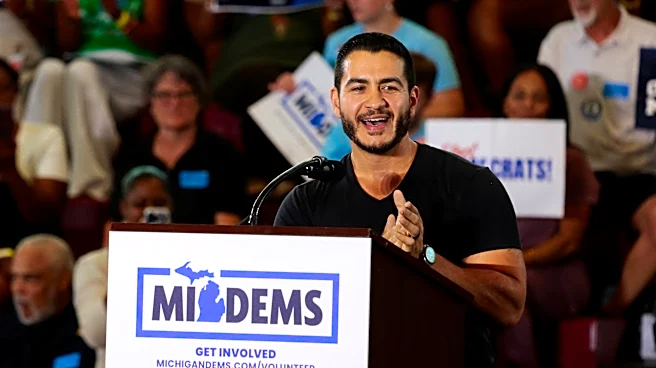
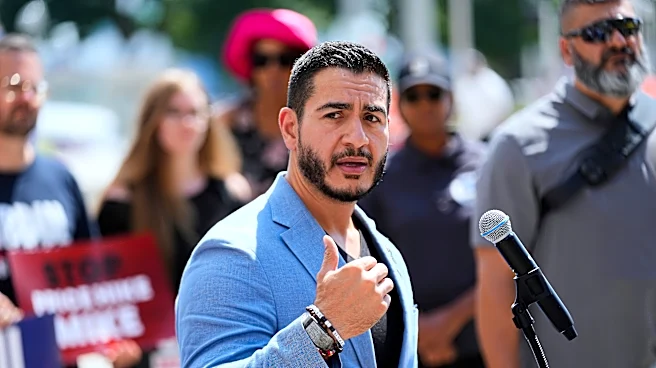
Rogers stated, "I saw the dead body of Osama bin Laden with my own eyes." However, reports indicate that Rogers, who was then chair of the House intelligence committee, was in Washington D.C. at the time of the raid in 2011 and only saw a photograph of bin Laden's body. He was informed of the raid by then-CIA Director Leon Panetta. Rogers had previously supported the decision not to release graphic images of bin Laden, citing risks of inflaming public opinion and fueling conspiracy theories. This claim is part of a broader pattern where Rogers has vaguely referred to his role in funding U.S. intelligence agencies, which critics suggest exaggerates his contributions. Rogers is currently running against Abdul El-Sayed, a Democrat, in a closely contested race.
Why It's Important?
This situation is important as it highlights issues of transparency and accuracy in political campaigning, particularly concerning national security credentials. For voters in Michigan, the veracity of a candidate's claims about significant historical events like the killing of Osama bin Laden can influence perceptions of their trustworthiness and leadership capabilities. The controversy could impact Rogers's standing in a competitive Senate race, where public trust is crucial. Exaggerated claims, even if perceived as minor by some, can erode voter confidence and become a focal point for opposing campaigns. Furthermore, the emphasis on national security experience by Rogers, especially when facing a Muslim opponent like Abdul El-Sayed, underscores how such narratives are strategically deployed in political discourse, potentially shaping voter sentiment on issues of terrorism and foreign policy. The need for candidates to balance their past achievements with factual accuracy is paramount in maintaining the integrity of the electoral process.
What's Next?
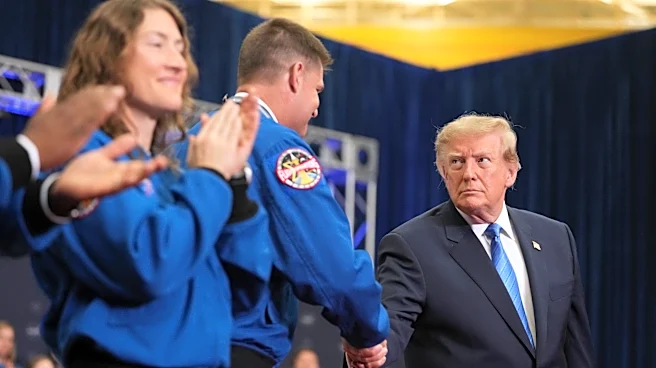
As the Michigan Senate race progresses, it is likely that Rogers's opponents, particularly Abdul El-Sayed, will continue to highlight these discrepancies in his public statements. The media will also likely maintain scrutiny on Rogers's past claims and campaign rhetoric. Rogers will need to address these allegations directly or risk further damage to his credibility among voters. His campaign may attempt to clarify his statements or pivot to other policy issues to deflect attention. The impact of these claims on polling numbers and voter perception will be closely watched, especially given the tight nature of the race. The broader implications for the Republican party in Michigan, particularly with President Trump's endorsement, will also be a factor, as Rogers attempts to appeal to both Trump's base and more moderate voters. The outcome of this scrutiny could significantly influence the dynamics of the election and potentially the balance of power in the U.S. Senate.
Beyond the Headlines
The controversy surrounding Mike Rogers's claims extends beyond the immediate political implications, touching upon the ethical standards of political communication and the public's right to accurate information from candidates. In an era where misinformation can spread rapidly, the expectation for public figures to be precise about their historical involvement in significant events is heightened. This incident also reflects a broader trend in political campaigns where candidates often embellish or selectively present their past to appeal to specific voter demographics. The use of national security credentials, particularly in the context of counter-terrorism, is a powerful tool in American politics, and any perceived misrepresentation can have profound effects on public trust in government and its leaders. This situation underscores the ongoing challenge for voters to discern truth from political rhetoric and the critical role of independent fact-checking in democratic processes.