

What's Happening?
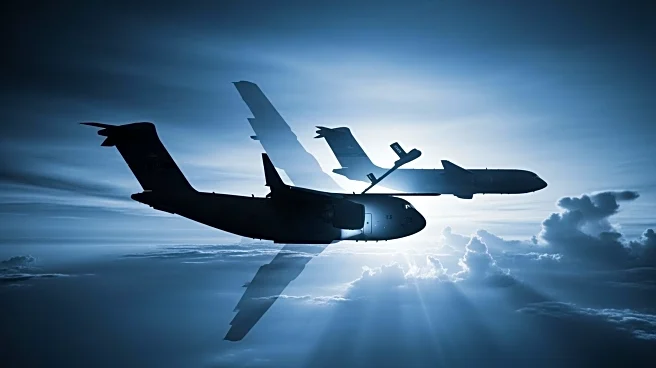
The U.S. military is reevaluating the roles of its airlift and tanker fleets in response to evolving threats in modern warfare. Traditionally, these aircraft have been crucial for rapid force deployment and logistical support, operating under the assumption
of air superiority. However, adversaries have developed advanced capabilities, such as long-range missiles and electronic warfare, which threaten these non-stealthy aircraft. This has prompted a shift in strategy, viewing airlift and tankers as contested assets that need to be integrated into the broader battle network. SNC's Mobility and HVAA Connectivity and Survivability Solutions exemplify this shift, offering modular systems that enhance the roles and survivability of these aircraft. These systems allow for rapid integration of new technologies, enabling aircraft to serve multiple roles, such as data relays and intelligence platforms, beyond their traditional functions.
Why It's Important?
This strategic reassessment is crucial as it addresses the vulnerabilities of U.S. air mobility in high-threat environments. By transforming airlift and tanker aircraft into multi-role platforms, the military can enhance operational flexibility and resilience. This approach not only extends the lifespan of existing fleets but also maximizes their utility in various missions, from humanitarian aid to intelligence gathering. The ability to adapt quickly to changing battlefield conditions is vital for maintaining U.S. military effectiveness and ensuring the safety of personnel and assets. This shift also reflects a broader trend towards network-centric warfare, where connectivity and information sharing are key to operational success.
What's Next?
The U.S. military is likely to continue investing in modular and adaptable systems for its airlift and tanker fleets. This could involve further integration of advanced sensors and communication technologies to enhance situational awareness and command capabilities. As these systems are tested in exercises and real-world operations, feedback will inform future upgrades and modifications. Additionally, the military may explore partnerships with defense contractors to accelerate the development and deployment of these technologies. The success of these initiatives will depend on balancing the need for innovation with the constraints of existing infrastructure and budgetary considerations.