







What's Happening?
A new report from Oregon's Legislative Policy and Research Office has identified significant shortcomings in the state's ability to track data and manage complaints regarding farmworker conditions. The 75-page report, mandated by a 2025 state law, highlights
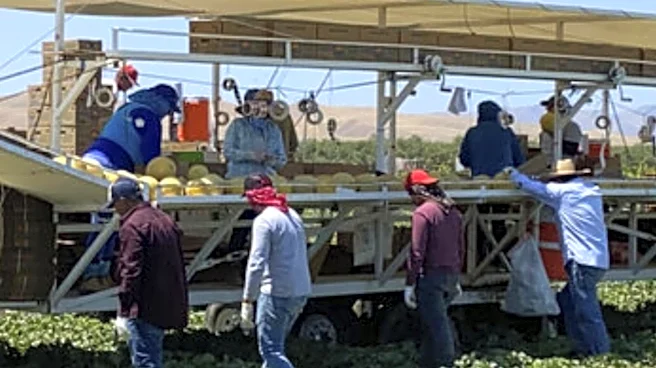
a lack of a unified system for data collection and interagency coordination in enforcing labor standards for farmworkers. While Oregon has some of the nation's strongest legal protections for farmworkers, covering issues like pesticide use, heat safety, and housing, the report indicates that collaboration among agencies such as the Department of Consumer and Business Services, the Oregon Occupational Safety and Health Division, and the Oregon Department of Agriculture is limited. This fragmented approach makes it difficult for the state to effectively monitor the well-being of its farmworker population and assess the efficacy of existing protections.
Why It's Important?
The findings of this report are crucial for understanding the challenges faced by Oregon's multi-billion dollar agricultural industry and its workforce. The lack of comprehensive and unified data means that policymakers and advocates struggle to accurately gauge the impact of labor laws, identify areas needing improvement, and ensure that farmworkers receive the protections they are entitled to. This issue is particularly pertinent given that many farmworkers are immigrants and often face unique vulnerabilities. The report also precedes another anticipated report on agricultural overtime, which could lead to legislative changes. Without clear metrics, it is difficult to assess the true economic and social effects of policies like the agricultural overtime law, which has been shown to increase hourly wages but potentially reduce overall earnings for some workers. This situation can perpetuate inequities and hinder efforts to improve working conditions for a vital segment of the state's economy.
What's Next?
The report's findings are expected to inform future legislative discussions, particularly as lawmakers prepare to receive another report on agricultural overtime at the end of November. This upcoming report will detail the economic impact of a 2022 state law that phases in more stringent overtime standards for farmworkers. Lawmakers may revisit this law in the 2027 legislative session, potentially considering adjustments similar to other states that apply overtime beyond a higher threshold. Advocacy groups, such as Pineros y Campesinos Unidos del Noroeste, are pushing for further action on issues like piece rate wages and collective bargaining protections, emphasizing that farmworkers still face inadequate living conditions and unequal labor standards. The Oregon Farm Bureau, while acknowledging the report, suggests that the lack of unified data is not unique to agriculture, implying that broader systemic changes might be needed across various industries.
Beyond the Headlines
The fragmented data collection and complaint processes in Oregon highlight a deeper systemic issue regarding the visibility and protection of vulnerable workforces. The report implicitly points to the ethical imperative of ensuring that all workers, regardless of their industry or immigration status, have access to clear channels for redress and that their working conditions are adequately monitored. The challenges in data collection also reflect broader societal biases and the historical marginalization of farmworkers. Addressing these issues goes beyond mere administrative fixes; it requires a fundamental shift in how society values and protects its agricultural labor force. This could involve investing in more robust, integrated data systems, strengthening interagency mandates for collaboration, and empowering farmworker advocacy groups to play a more central role in policy development and enforcement. The long-term implications could include improved labor practices, reduced exploitation, and a more equitable agricultural sector.