






What's Happening?
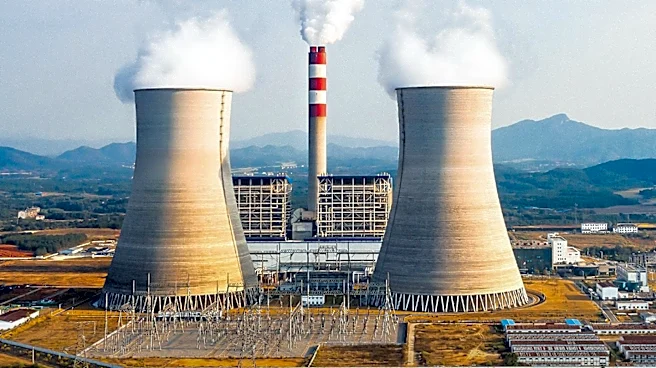
China has successfully connected its first indigenously developed Hualong One nuclear reactor to the grid in Hainan province. This marks a significant milestone in China's strategy to meet its energy demands while reducing carbon emissions. The Hualong One reactor,
a Generation III pressurized water reactor, is part of China's broader plan to peak carbon emissions by 2030 and achieve net zero by 2060. The reactor features advanced safety measures, including a double containment shell and a passive emergency cooling system. This development is part of China's commitment to nuclear energy as a means to provide carbon-free energy, despite the U.S. withdrawing from the Paris Agreement.
Why It's Important?
The connection of the Hualong One reactor to the grid is a critical step in China's efforts to transition to clean energy and reduce its carbon footprint. As the world grapples with climate change, China's commitment to nuclear energy positions it as a leader in the global shift towards sustainable energy solutions. This move not only supports China's domestic energy needs but also sets a precedent for other nations aiming to balance energy demands with environmental responsibilities. The reactor's advanced technology and safety features highlight China's capability in developing indigenous nuclear technology, which could influence global energy policies and market dynamics.
What's Next?
The Hualong One reactor will undergo extensive testing before becoming fully operational. Once operational, it will contribute significantly to China's energy grid, reducing reliance on coal and other fossil fuels. China's continued investment in nuclear technology is expected to drive further advancements in reactor safety and efficiency. As China progresses towards its carbon neutrality goals, other countries may look to its nuclear strategy as a model for integrating clean energy into their own grids. The success of the Hualong One reactor could also lead to increased international collaboration in nuclear technology development.