

What's Happening?
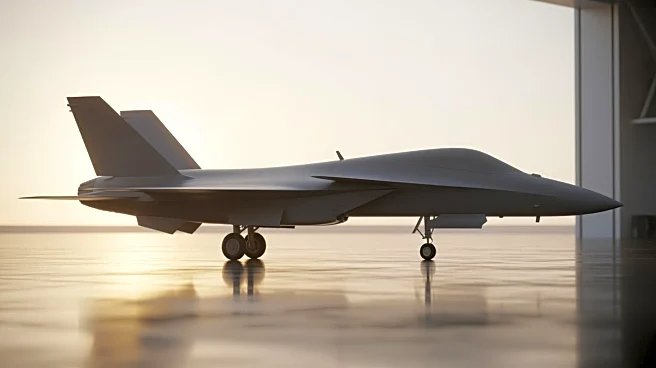
Turkey's Defense Industries Agency, SSB, has released images of the second prototype of the Kaan fighter, developed by Turkish Aerospace Industries (TAI). The prototype, known as P1, is nearly complete and features several design modifications from its
predecessor, P0. Notable changes include repositioned and enlarged air intakes and the installation of two General Electric F110 engines. The aircraft is equipped with advanced systems such as the Aselsan Karat infrared search and track and the Toygun electro-optical targeting system. The first flight of P1 is anticipated by May or June 2026. This development follows a setback in securing additional investment from Saudi Arabia, although Turkish officials remain optimistic about future collaboration.
Why It's Important?
The unveiling of the Kaan fighter's second prototype marks a significant milestone in Turkey's efforts to enhance its domestic defense capabilities. The Kaan program is a testament to Turkey's growing technological prowess and institutional coordination in aviation. By developing indigenous fighter jets, Turkey aims to reduce its reliance on foreign military equipment, particularly as it plans to replace its aging fleet of Lockheed Martin F-16s. The program's success could bolster Turkey's defense industry, potentially leading to increased exports and strategic partnerships. However, the reliance on foreign engines until a domestic alternative is developed highlights ongoing challenges in achieving full self-sufficiency.
What's Next?
The next steps for the Kaan program include the maiden flight of the P1 prototype and continued efforts to secure investment from international partners, particularly Saudi Arabia. Turkish Aerospace Industries plans to produce 20-40 aircraft using the F110 engines before transitioning to a domestically developed powerplant, the TF35000, expected in the 2030s. The Turkish Air Force aims to integrate the first batch of Kaan fighters by the end of the decade. The program's progress will be closely monitored by global defense stakeholders, as it could influence regional military dynamics and Turkey's position in the international defense market.