





What's Happening?
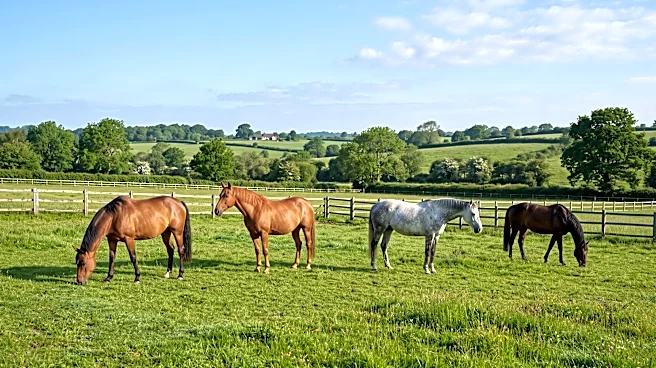
A historic arrest has been made in New York, marking the first enforcement of a 2024 state law banning the sale and transport of horses for slaughter. A Pennsylvania truck driver was apprehended in St. Lawrence County while allegedly transporting 25 horses from
Rotz Livestock in Shippensburg, Pennsylvania, to a slaughterhouse in Quebec, Canada. The arrest was the culmination of an investigation initiated by Animals’ Angels, a Maryland-based organization that has been tracking Bruce Rotz's operation since 2009. Animals’ Angels documented the conditions of transport, which often involved extreme temperatures, lack of food and water, and instances of horses falling and being trampled. Sonja Meadows, founder and president of Animals’ Angels, expressed satisfaction with the enforcement of the law, noting that her organization had previously provided evidence to the New York State Attorney General's office, which had declined to investigate due to resource limitations. The 25 horses seized are now receiving veterinary care in Saratoga County and will be put up for adoption.
Why It's Important?
This arrest signifies a major victory for animal rights advocates and sets a crucial precedent for the enforcement of anti-horse slaughter laws in the United States. The 2024 New York law aims to prevent the inhumane transport and slaughter of horses, a practice that has been a long-standing concern for animal welfare organizations. The successful interdiction of this shipment demonstrates that state laws can be effectively enforced against interstate operations, potentially deterring other individuals and businesses involved in the horse slaughter pipeline. The case also highlights the persistent efforts of organizations like Animals’ Angels in gathering evidence and collaborating with law enforcement to bring about change. The rescue and subsequent adoption of the 25 horses offer a positive outcome for the individual animals and underscore the importance of such interventions. This event could encourage other states to enact or more rigorously enforce similar legislation, further restricting the horse slaughter industry.
What's Next?
The arrested truck driver is scheduled to appear in DeKalb Town Court at a later date. The penalty for a commercial enterprise transporting horses for slaughter through New York is $2,500 per horse, while an individual faces $1,500 per horse. The status of Bruce Rotz, the owner of Rotz Livestock, regarding potential prosecution remains unclear. The 25 horses are currently under veterinary care in Saratoga County and will be made available for adoption, with Animals’ Angels confirming they are receiving excellent care. This case is expected to be closely watched by animal welfare organizations and the horse industry, as it could influence future legislative efforts and enforcement actions across the country. The successful collaboration between Animals’ Angels, the New York State Humane Association, the Warren County (NY) District Attorney’s Office, New York State Police, U.S. Customs and Border Protection, and the U.S. Department of Agriculture may serve as a model for future interdictions.
Beyond the Headlines
This historic arrest in New York's horse slaughter pipeline brings to light the complex and often brutal realities of the global horse meat market. While the U.S. has largely banned horse slaughter, the practice persists through cross-border transport to countries like Canada, where horse meat is processed for export to markets such as Japan. This case underscores the ethical dilemma of animal welfare versus economic interests, particularly in an industry where animals endure severe conditions during transport. The long-term efforts of organizations like Animals’ Angels highlight the dedication required to combat such practices, often against significant logistical and legal challenges. The incident also raises questions about the effectiveness of existing laws and the need for stronger interstate and international cooperation to close loopholes in animal protection. Ultimately, this event contributes to a broader societal conversation about the moral status of animals and the extent to which legal frameworks should protect them from exploitation.