









What's Happening?
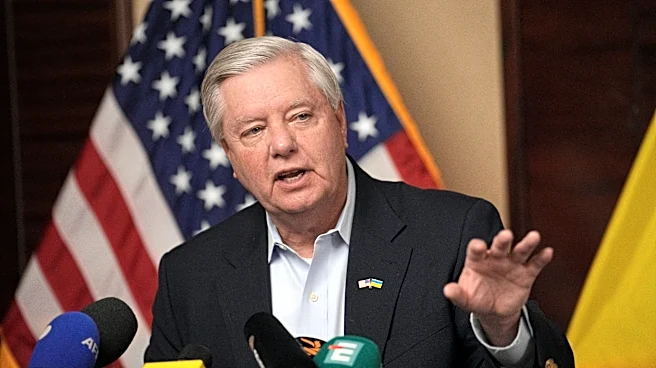
Senator Lindsey Graham, a key Republican figure and close ally of President Donald Trump, has died at the age of 71. His office announced that he succumbed to a brief and unexpected illness. Graham was a significant force in U.S. foreign policy, known
for his hard-line stance on Iran and his support for Ukraine. His death not only leaves a vacancy in the Senate but also removes a prominent voice in the Republican Party. President Trump and other world leaders have expressed their condolences, highlighting Graham's influence and dedication to his role.
Why It's Important?
Graham's death is a major loss for the Republican Party and the U.S. Senate, where he was a leading advocate for strong national security policies. His influence extended beyond domestic politics, impacting international relations, particularly with countries like Ukraine and Israel. The absence of his leadership could lead to changes in how the U.S. approaches foreign policy issues, potentially affecting international alliances and strategies. His passing also raises questions about the future direction of the Republican Party's foreign policy agenda.
What's Next?
The Republican Party will need to address the vacancy left by Graham's death, which could lead to a competitive race for his Senate seat. This transition period may also see shifts in the party's foreign policy leadership as other members step up to fill the roles Graham held. The impact on U.S. foreign relations, especially with countries Graham was closely involved with, will be an area of focus. Additionally, the party will likely work to honor Graham's legacy by continuing his policy initiatives and maintaining his influence in ongoing international discussions.