





What's Happening?
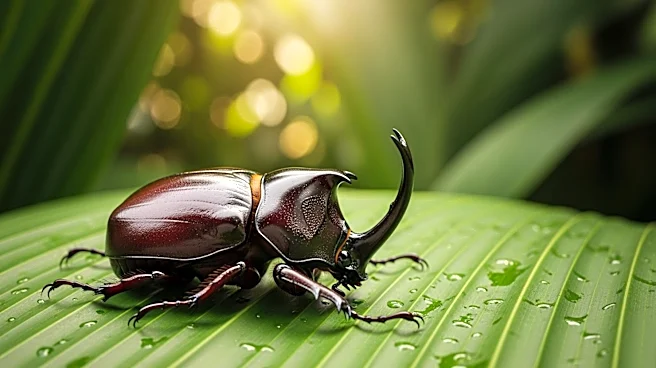
The Moloka'i invasive species crew, led by Lori Buchanan, is ramping up efforts to combat the Coconut rhinoceros beetle (CRB) threat after the first detections of the beetle on the island. The beetles, which are highly destructive to palms and other plants,
were found in traps near Kaunakakai Wharf and 10 miles to the west. The crew has been monitoring for CRB since 2014, following its initial detection in Hawai'i on O'ahu in 2013. With over 40 traps already in place, the team is now installing more than 30 new traps to enhance early detection capabilities. The crew is working overtime to identify potential breeding sites and prevent the beetle's spread. The recent detections follow a state ban on importing potential CRB host materials to Moloka'i, highlighting the urgency of the situation.
Why It's Important?
The presence of the Coconut rhinoceros beetle on Moloka'i poses a significant threat to the island's ecosystem and subsistence lifestyle, which relies heavily on local agriculture. The beetle's ability to destroy palm trees and other plants could have devastating effects on the island's biodiversity and food security. The invasive species crew's efforts are crucial in preventing the establishment of CRB populations, which could lead to long-term ecological damage. The situation underscores the importance of early detection and rapid response in managing invasive species, as well as the need for community involvement in reporting sightings. The collaboration between local agencies and the community is vital to protect Moloka'i's natural resources and maintain its ecological balance.
What's Next?
The Moloka'i invasive species crew plans to expand its capacity and infrastructure to tackle the CRB threat more effectively. This includes increasing the number of traps and enhancing monitoring efforts across the island. The team is also working closely with the state Department of Agriculture and Biosecurity, and the County of Maui, to coordinate emergency response actions. Residents are encouraged to report sightings of CRB or their larvae to MoMISC for proper identification and tracking. The crew aims to continue its successful track record in managing invasive species by leveraging community support and advanced detection methods. The ongoing efforts will focus on preventing the beetle's spread and protecting the island's ecological integrity.
Beyond the Headlines
The CRB threat on Moloka'i highlights broader issues related to invasive species management and the challenges faced by isolated ecosystems. The island's reliance on subsistence agriculture makes it particularly vulnerable to ecological disruptions caused by invasive species. The situation also raises questions about the effectiveness of existing biosecurity measures and the need for more robust policies to prevent the introduction of harmful species. The collaboration between local agencies and the community serves as a model for other regions facing similar threats, emphasizing the importance of collective action and proactive strategies in preserving biodiversity.