






What's Happening?
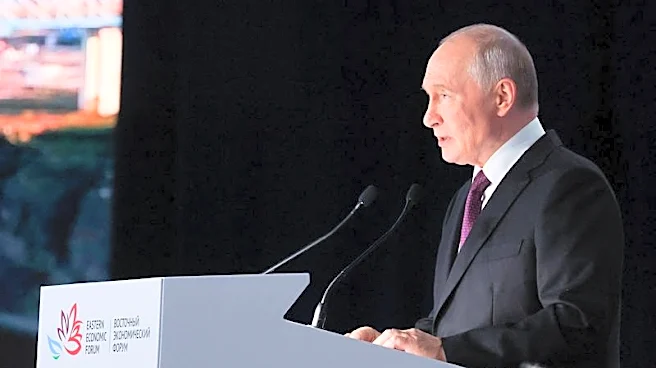
Special services of Russia and the United States are actively maintaining communication channels, as confirmed by Russian Foreign Ministry Spokeswoman Maria Zakharova. This ongoing dialogue was highlighted by Russian President Vladimir Putin, who emphasized
its routine nature. The primary objective of these communication channels is to prevent escalation between the two nations and to address issues of mutual interest. This statement underscores a continuous, albeit often discreet, line of communication between the intelligence and security agencies of both countries, even amidst broader geopolitical tensions. The functioning of these channels suggests a pragmatic approach to managing potential crises and ensuring a degree of stability in the complex relationship between Russia and the U.S.
Why It's Important?
The continued functioning of communication channels between Russian and U.S. special services is critically important for global stability and de-escalation. In an era marked by heightened geopolitical tensions, particularly concerning conflicts like the one in Ukraine, direct lines of communication between major powers are essential to prevent miscalculations and unintended confrontations. These channels serve as a vital mechanism for intelligence sharing on critical threats, crisis management, and potentially, for negotiating sensitive issues that cannot be addressed through conventional diplomatic means. For the U.S., maintaining these channels allows for a degree of insight into Russian intentions and capabilities, potentially mitigating risks of direct conflict. Conversely, the absence of such communication could lead to increased mistrust, misinterpretation of actions, and a higher likelihood of escalation, impacting international security and potentially U.S. national interests.
What's Next?
The ongoing communication between Russian and U.S. special services is likely to continue as a behind-the-scenes effort to manage the complex relationship between the two nations. While public diplomatic relations may remain strained, these covert channels will probably persist as a necessary tool for crisis prevention and de-escalation. Future interactions could involve discussions on specific security concerns, such as counter-terrorism efforts, cybersecurity threats, or regional conflicts where both countries have vested interests. The nature of these communications is expected to remain largely confidential, with public statements serving primarily to acknowledge their existence rather than detailing their content. This approach allows both sides to maintain a degree of operational flexibility while signaling a commitment to avoiding direct confrontation.
Beyond the Headlines
The existence of these communication channels between Russian and U.S. special services highlights a deeper, often unacknowledged, layer of international relations. It suggests that despite public rhetoric and political disagreements, there is a fundamental recognition by both powers of the need for direct, pragmatic engagement on matters of national security. This 'back-channel diplomacy' can be crucial in preventing conflicts from spiraling out of control, offering a discreet avenue for de-escalation when official diplomatic ties are strained. It also raises questions about the balance between transparency and necessity in international relations, as these critical dialogues often occur outside public scrutiny. The long-term implications include the potential for these channels to evolve into more structured mechanisms for managing global security challenges, even as overt political relations remain volatile.