



What's Happening?
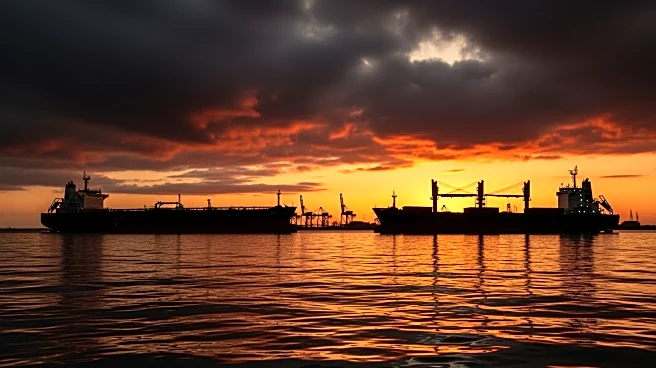
The ongoing conflict between the U.S., Israel, and Iran has led to a series of attacks on oil and cargo ships in the Persian Gulf. Since the conflict began nearly two weeks ago, at least 16 vessels have been targeted, with Iran claiming responsibility
for several of these attacks. The violence has primarily focused on oil and energy infrastructure, significantly disrupting the global oil supply. The Strait of Hormuz, a critical passageway for one-fifth of the world's oil, has seen a drastic reduction in shipping traffic, with only one or two ships crossing daily compared to the usual 80. The International Energy Agency has described this as the largest supply disruption in the history of the global oil market.
Why It's Important?
The attacks on oil and cargo ships in the Persian Gulf have profound implications for the global economy, particularly affecting energy markets. The disruption in oil supply has led to a significant increase in international oil prices, which have risen by nearly 40% since the conflict began. This price surge threatens to impact energy, food, and industrial supplies worldwide, potentially stoking inflation and economic instability. The U.S. and other major economies have pledged to release emergency oil reserves to mitigate the shortfall, but the ongoing conflict poses a risk of prolonged economic repercussions.
What's Next?
As the conflict continues, further attacks on shipping and energy infrastructure are likely, which could exacerbate the current supply disruptions. The international community may increase diplomatic efforts to de-escalate tensions and secure safe passage for shipping in the region. Additionally, countries heavily reliant on Middle Eastern oil may seek alternative energy sources or increase domestic production to reduce dependency on the volatile region.
Beyond the Headlines
The conflict highlights the vulnerability of global supply chains to geopolitical tensions, particularly in regions critical to energy production and transportation. It underscores the need for diversified energy sources and more resilient supply chain strategies to withstand such disruptions. The situation also raises ethical and legal questions about the targeting of civilian infrastructure in conflicts and the broader humanitarian impact on affected populations.