









What's Happening?
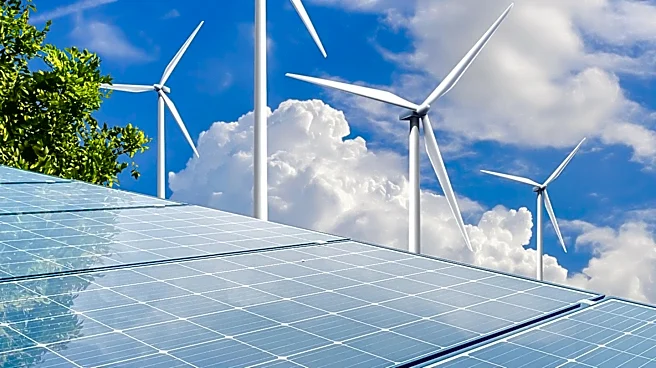
In 2025, China led Asia in avoiding $177 billion in fossil fuel costs by expanding its renewable energy capacity, according to the International Renewable Energy Agency (IRENA). This shift is part of a broader trend across Asia, where countries like India
and Japan also reported significant savings. The report highlights that over 90% of new renewable capacity in 2025 was cheaper than the lowest-cost fossil fuel alternatives. This transition has helped reduce exposure to volatile fuel prices, particularly during disruptions like the Strait of Hormuz incident in early 2026. IRENA projects that renewable energy costs will continue to decline, albeit at a slower pace.
Why It's Important?
The move towards renewable energy in Asia, led by China, underscores the economic and environmental benefits of reducing reliance on fossil fuels. This transition not only mitigates the impact of fuel price volatility but also supports global efforts to combat climate change. The financial savings achieved through renewable energy investments highlight the potential for other regions, including the U.S., to benefit from similar strategies. As renewable energy becomes more cost-effective, it could drive further investments and policy shifts towards sustainable energy solutions worldwide.