







What's Happening?
The U.S. Department of Energy (DOE) has granted Entergy $13.7 million in federal funding to enhance electric grid reliability and meet increasing energy demands across Arkansas, Louisiana, and Mississippi. This investment, part of the DOE’s Speed to Power
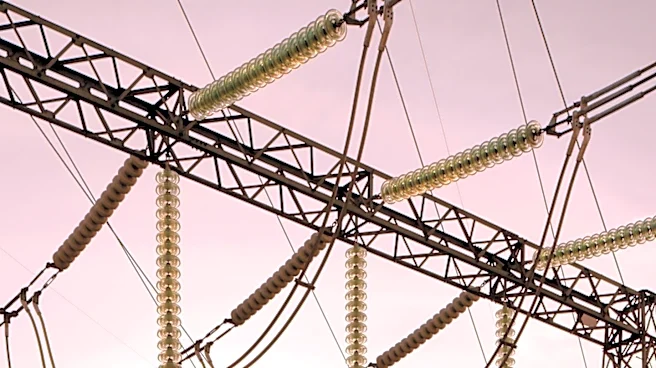
through Accelerated Reconductoring and other Key Advanced Transmission Technology Upgrades (SPARK) program, will enable Entergy to deploy advanced dynamic line rating technology across more than 1,000 miles of existing transmission lines. The project also includes targeted geographic surveys, substation and terminal upgrades, and hardware integration along 1,125 miles of transmission corridors. According to John Hudson, chief external affairs officer for Entergy, this new technology aims to deliver more reliable and affordable electricity by reducing congestion, improving system readiness for large loads, and potentially avoiding capital costs for other transmission upgrades. The upgrades are designed to increase transfer capability on selected transmission lines by at least 25%, with early modeling showing potential for a 29% to 61% increase in available power capacity in some areas.
Why It's Important?
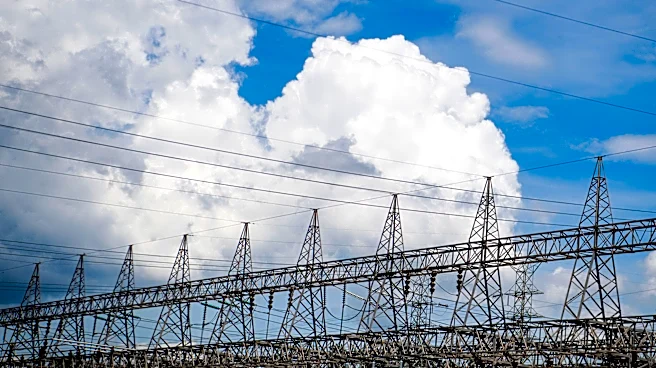
This federal funding is crucial for modernizing the electric grid in a region experiencing significant load growth due to new industrial development, manufacturing, and data center expansion. By increasing the capability of existing transmission corridors, Entergy can more effectively manage its energy infrastructure, which is vital for supporting economic growth and attracting further investment in the communities it serves. The project's ability to reduce congestion and use existing assets more efficiently could lead to cost savings for customers by deferring future infrastructure investments. Furthermore, establishing a scalable and repeatable model for deploying advanced transmission technologies across multiple operating companies sets a precedent for broader grid modernization efforts. This initiative underscores the growing recognition by governments and utilities that grid modernization is a critical investment in both infrastructure and long-term economic competitiveness, ensuring a more resilient and reliable energy supply for the future.
What's Next?
The project is expected to take four years to complete. During this period, Entergy will implement dynamic line rating technology, conduct geographic surveys, and perform substation and hardware upgrades. The company plans for this initiative to serve as a model for future grid modernization efforts across its other operating companies, suggesting a potential for similar projects in other regions. As constraints shift over time, Entergy anticipates redeploying dynamic line rating sensors to new corridors, extending the value of the initial investment and accelerating future modernization efforts. This strategic approach aims to continuously improve grid conditions, manage congestion, and reduce costs, ultimately benefiting customers and supporting regional economic development.
Beyond the Headlines
The investment in dynamic line rating technology represents a deeper shift towards intelligent grid management, moving beyond simply expanding infrastructure to optimizing existing assets. This approach leverages real-time data and operational enhancements to maximize the efficiency and capacity of current transmission lines, which has significant environmental and economic implications. By reducing the need for new transmission line construction, it can mitigate environmental impact and potentially lower overall infrastructure costs. The project also highlights the increasing demand for electricity driven by technological advancements like data centers, emphasizing the critical need for a robust and adaptable grid. This modernization effort is not just about technology; it's about transforming the operational paradigm of electricity delivery to meet evolving demands and ensure long-term energy resilience.