
What's Happening?
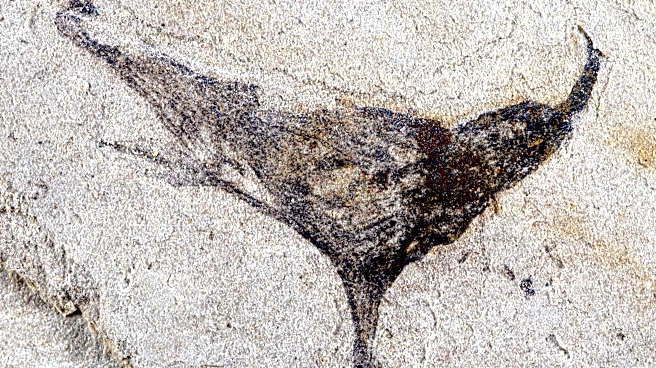
Researchers have uncovered a significant fossil trove at the Jiangchuan Biota site in China's Yunnan province, revealing that complex animal life may have existed millions of years earlier than previously believed. The site, measuring 518 square feet,
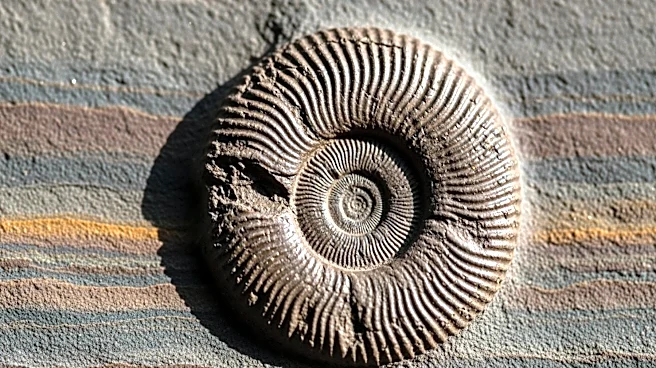
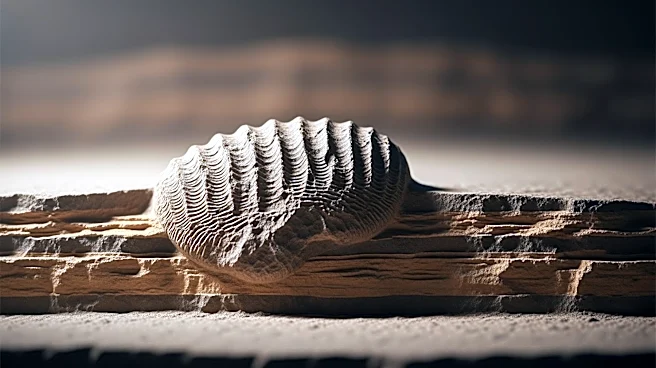
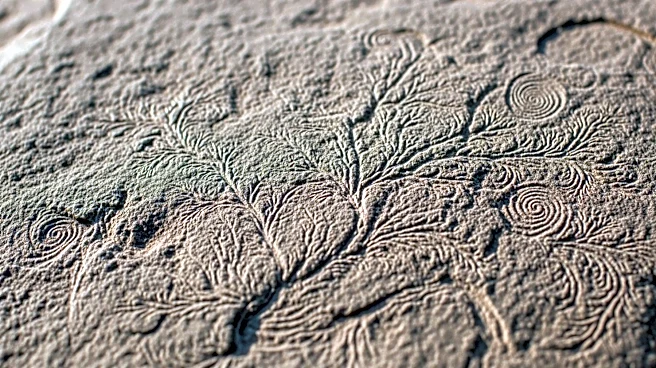
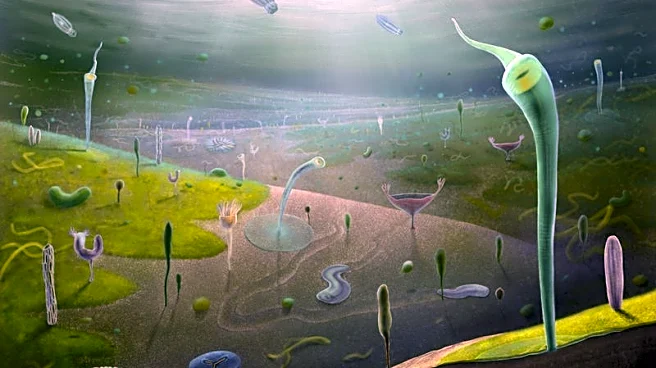
yielded approximately 700 fossils, with about 200 representing animals. These fossils, dating back to the Ediacaran period (635 million to 542 million years ago), suggest that complex animals, possibly ancestors of all vertebrates, were present at least 4 million years before the Cambrian period, which was previously thought to be the dawn of complex life. The fossils include a variety of organisms, such as goblet-shaped sea jelly relatives and wormlike animals with holdfast discs, preserved in exquisite detail.
Why It's Important?
This discovery challenges the long-held belief that complex animal life began during the Cambrian explosion, a period known for a rapid increase in animal diversity and complexity. The findings suggest that the evolutionary processes leading to complex life forms may have started earlier than previously thought, potentially reshaping our understanding of the timeline of life's evolution on Earth. This could have significant implications for the study of evolutionary biology, as it provides new insights into the origins and development of complex life forms, including vertebrates, which are crucial for understanding the evolutionary history of modern animals.
What's Next?
The study of these fossils is just beginning, with researchers planning to explore the conditions that led to their exceptional preservation. Further analysis will focus on understanding the biology, habits, and interactions of these ancient organisms, which could provide valuable information about the early stages of animal evolution. This ongoing research may lead to new discoveries about the ecological dynamics of the Ediacaran period and the evolutionary pathways that led to the diversity of life observed during the Cambrian explosion.