







What's Happening?
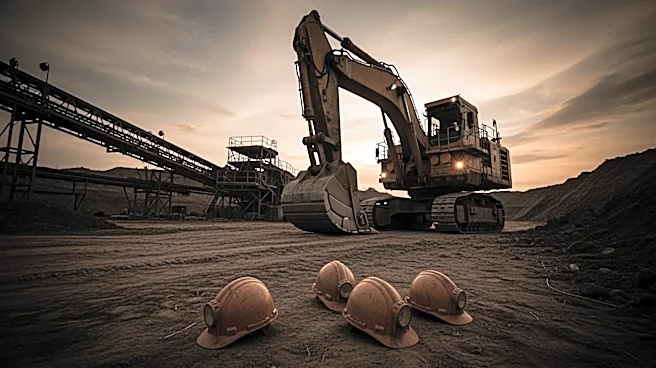
Zambia's mining sector is experiencing a cautious recovery and consolidation after a period of underperformance, according to Control Risks senior analyst Otlotleng Mokgatle. Copper remains the backbone of the industry, with output increasing by 8% in 2025.
However, the country struggles to meet production targets, and the government's goal of reaching three million tonnes of copper annually by 2031 is seen as aspirational. The policy and regulatory environment has stabilized under President Hakainde Hichilema, improving investor confidence. The establishment of the Minerals Regulation Commission aims to modernize mining governance, but its impact on regulatory efficiency is yet to be seen.
Why It's Important?
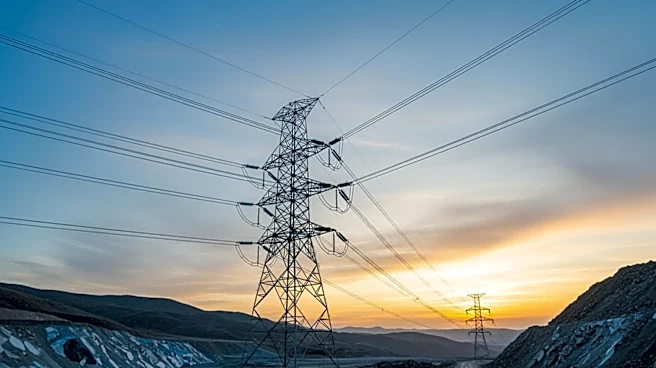
Zambia's mining sector is crucial for its economy, providing significant export revenues and foreign exchange earnings. The stabilization of the policy environment under President Hichilema has improved investor confidence, which is vital for attracting capital and achieving production targets. However, challenges such as power constraints, logistics bottlenecks, and regulatory inefficiencies continue to hinder progress. Addressing these issues is essential for Zambia to fully capitalize on its mineral resources and achieve sustainable economic growth. The upcoming general election in 2026 could impact policy continuity and investor sentiment.
What's Next?
Zambia's government will need to focus on implementing reforms to improve infrastructure and regulatory efficiency. The Minerals Regulation Commission must demonstrate its ability to streamline processes and reduce administrative friction. The outcome of the 2026 general election will be crucial in determining the future policy direction and investor confidence in the mining sector. Continued efforts to address power and logistics challenges will be necessary to support the sector's growth and stability.