
What's Happening?
China's Belt and Road Initiative (BRI), a massive infrastructure and economic development project, is facing significant challenges due to the ongoing conflict with Iran. The BRI, which aims to enhance
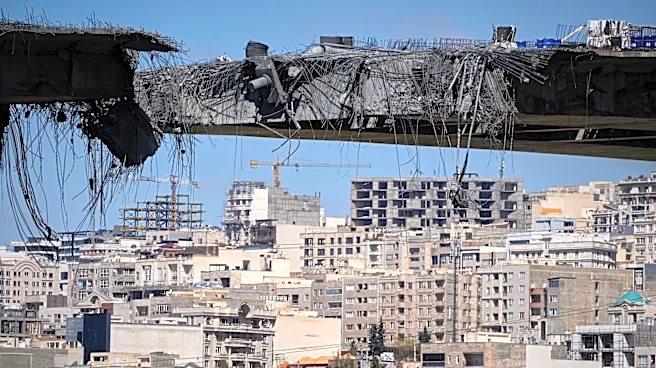
global trade routes and economic connectivity, has heavily relied on Iran as a central hub in its Middle East corridor. However, the war has disrupted key infrastructure projects in Iran, including rail, ports, and energy sectors, rendering them uncertain or unusable. This conflict has exposed the vulnerability of the BRI to geopolitical tensions, particularly in regions critical to its success. The instability in Iran has also affected the Strait of Hormuz, a vital passage for Gulf energy supplies, further complicating China's strategic plans.
Why It's Important?
The disruption of the BRI due to the Iran conflict highlights the inherent risks of intertwining economic initiatives with geopolitically unstable regions. For China, this means a shift from expansion to risk management, as it seeks to mitigate the impact of such conflicts on its global ambitions. The reliance on Iran as a stable anchor has proven precarious, prompting China to explore alternative routes through Central Asia and Southeast Asia. This shift could lead to increased fragmentation of the BRI into regional 'mini corridors,' affecting the overall coherence and efficiency of the initiative. The situation underscores the broader implications for global trade and energy security, as China's strategic adjustments could influence international economic dynamics.
What's Next?
In response to the challenges posed by the Iran conflict, China is likely to intensify its focus on alternative routes and diversify its investments to reduce exposure to unstable regions. This may involve strengthening ties with other countries in Central Asia and Southeast Asia, despite existing geopolitical tensions, such as those involving Russia and the ongoing Ukraine conflict. Additionally, China may increase its energy stockpiling and export restrictions to safeguard its economic interests. The evolving situation could prompt other countries involved in the BRI to reassess their roles and strategies, potentially leading to shifts in regional alliances and economic partnerships.
Beyond the Headlines
The Iran conflict's impact on the BRI also raises questions about the sustainability of large-scale infrastructure projects in volatile regions. It highlights the need for more resilient and adaptable strategies that can withstand geopolitical shocks. The situation may prompt a reevaluation of the BRI's long-term goals and the balance between economic expansion and security considerations. Furthermore, the conflict underscores the interconnectedness of global trade and security, as disruptions in one region can have cascading effects on international markets and political relations.