
What's Happening?
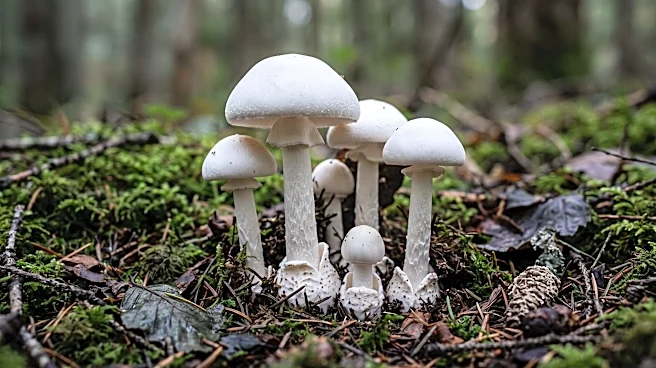
The California Department of Public Health (CDPH) has issued a warning regarding poisonous mushrooms after four people died in a statewide outbreak that began last fall. One case in Humboldt County involved
western destroying angel mushrooms, which were mistaken for puffballs, leading to hospitalization. Jayme Castro, a local mycologist, emphasized the danger of misidentification, even for experienced foragers, especially when hunting in unfamiliar regions. Castro noted that poisonous mushrooms, such as death caps and western destroying angels, contain toxins that can cause severe liver damage. Symptoms may initially improve before worsening significantly, potentially leading to a false sense of recovery. CDPH officials advise anyone who suspects they have eaten a poisonous mushroom to seek immediate medical care and contact Poison Control.
Why It's Important?
This warning highlights a critical public health concern, particularly as mushroom season is in full swing across California. The fatalities underscore the severe risks associated with foraging for wild mushrooms without expert knowledge. The potential for misidentification, even by those with some experience, means that a broader public education effort is crucial. The delayed and fluctuating nature of symptoms from certain poisonous mushrooms, where initial improvement can precede a severe decline, poses a significant challenge for timely medical intervention. This situation places a burden on emergency services and healthcare providers, who must be vigilant in diagnosing and treating mushroom poisoning cases, which can require complex medical care, including liver transplants in severe instances.
What's Next?
To mitigate further incidents, public health officials and mycological societies are likely to increase their efforts in educating the public about safe mushroom foraging practices. The Mount Shasta Mycological Society is hosting a Fall Fungus Fair, indicating a community-led initiative to provide guidance. It is anticipated that more local mycologists and health departments will stress the importance of consulting regional field guides and learning from knowledgeable foragers. Individuals interested in foraging will be encouraged to join local mycological societies and focus on identifying only a few species at a time. Continued vigilance from the public and healthcare professionals will be necessary to prevent additional poisonings and fatalities throughout the mushroom season.
Beyond the Headlines
The recurring issue of mushroom poisoning points to a broader societal trend of increased interest in foraging and wild foods, often without adequate knowledge or training. While foraging can connect individuals with nature and provide fresh produce, it also carries inherent risks that are often underestimated. This situation highlights the need for accessible, reliable educational resources and community-based learning opportunities for those interested in wild edibles. Furthermore, it underscores the importance of traditional ecological knowledge and the expertise of local mycologists, whose guidance is invaluable in preventing tragic outcomes. The incidents also serve as a reminder of the delicate balance between human interaction with natural environments and the potential dangers that can arise from a lack of understanding.