

What's Happening?
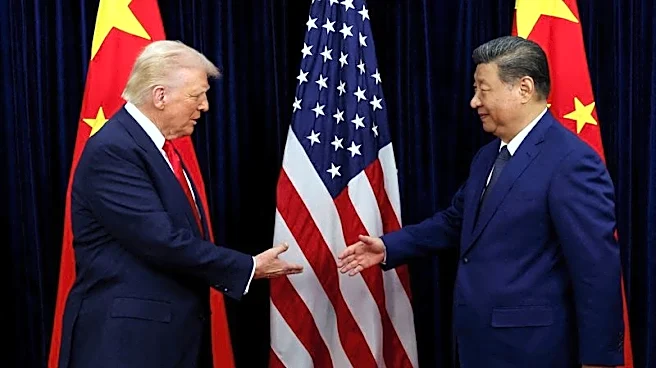
The International Monetary Fund (IMF) has expressed approval of the recent dialogue between U.S. President Donald Trump and Chinese President Xi Jinping. This engagement is seen as a positive step towards reducing tensions and uncertainty between the two
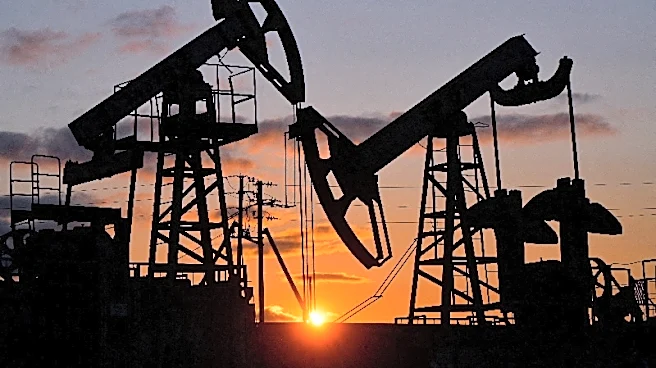
largest economies in the world. According to IMF spokesperson Julie Kozack, the constructive dialogue is beneficial not only for the U.S. and China but also for the global economy. The discussions come amid ongoing pressures from geopolitical tensions in the Middle East, particularly Iran's closure of the Strait of Hormuz, which has driven crude oil prices above $100 per barrel. The IMF has outlined various economic scenarios in its April World Economic Outlook, with the current situation aligning with a middle 'adverse scenario' that predicts a slowdown in global GDP growth.
Why It's Important?
The dialogue between the U.S. and China is crucial as it addresses trade tensions that have significant implications for global economic stability. By reducing uncertainty, both countries can potentially foster a more stable economic environment, which is essential for international trade and investment. The IMF's acknowledgment of this dialogue underscores its importance in mitigating risks associated with high oil prices and geopolitical tensions. The global economy's health is closely tied to the economic policies and relations of these two major powers, and their cooperation can lead to more predictable and stable markets, benefiting businesses and economies worldwide.
What's Next?
The IMF continues to monitor the situation and is in discussions with member countries about potential financial assistance to address the economic impacts of high energy and commodity costs. The organization is also providing policy advice to countries on how to manage these shocks effectively. As the dialogue between the U.S. and China progresses, further developments could influence global economic forecasts and policy decisions. The IMF's ongoing consultations with countries indicate a proactive approach to managing the economic challenges posed by current geopolitical tensions.