




What's Happening?
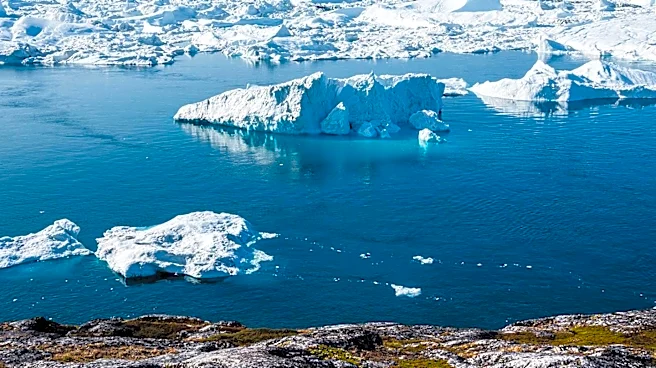
The Arctic region, historically considered peripheral, is increasingly becoming a crucial area for observing structural transformations in the international system. Global reorders, characterized by shifts in power distribution among major states, often
become visible first in marginal regions due to lower escalation risks and weaker institutionalization. The Arctic's growing role in global affairs and security is highlighted as a contemporary example of this phenomenon. The 'Arctic exceptionalism' narrative, which suggested the region was immune to great power rivalry, has fractured, particularly following Russia's 2022 invasion of Ukraine. This event led to a drastic shift in the policies of the seven Arctic states and the Arctic Council towards Russia's participation, demonstrating that the region mirrors broader global power politics.
Why It's Important?
The Arctic's transformation from a zone of cooperation to a theater of strategic competition signifies a deeper rupture in the international system, moving away from a U.S.-led liberal order towards a multipolar system. The U.S.'s own Arctic policy has evolved, with its 2019 strategy emphasizing 'great power competition' and militarization, a stark contrast to its 2013 focus on cooperation. China's increasing interest in the Arctic, reflected in its revised policy since 2018, also aligns with its broader ambitions as an emergent global power challenging unipolarity. These developments in the Arctic serve as a 'testing ground' for systemic change, where competing powers assess the limits of the emerging order. The region's strategic importance, including its vast natural resources and potential shipping routes, makes it a critical barometer for understanding the evolving global landscape.
What's Next?
The erosion of cooperation in the Arctic is expected to continue, with increased militarization and strategic competition among major powers. Policymakers are urged to recognize the Arctic's significance and avoid sidelining such regions, as escalations there can easily spill over and deepen global polarization. The need for resilient dialogue channels and robust crisis-management mechanisms, similar to historical precedents like the 1972 Incidents at Sea Agreement, is emphasized to prevent destabilization. Institutions in the Arctic must be designed to manage great power rivalry rather than assuming its absence. The ongoing shifts in the Arctic will likely continue to reflect and influence the broader rearrangement of power in contemporary world politics, with implications for international law, security, and resource management.
Beyond the Headlines
The Arctic's changing dynamics underscore a fundamental shift in the nature of international order, moving from a rules-based system to one where power politics and national interests increasingly dictate actions. The breakdown of 'Arctic exceptionalism' reveals that no region is truly isolated from global geopolitical forces. This development challenges the traditional understanding of international relations, suggesting that even seemingly remote areas can become focal points for systemic change. The long-term implications include potential environmental risks due to increased activity, heightened military presence, and complex legal challenges regarding sovereignty and resource exploitation in a rapidly changing climate. The Arctic's future will be a critical test case for how the international community navigates a multipolar world with competing interests.