








What's Happening?
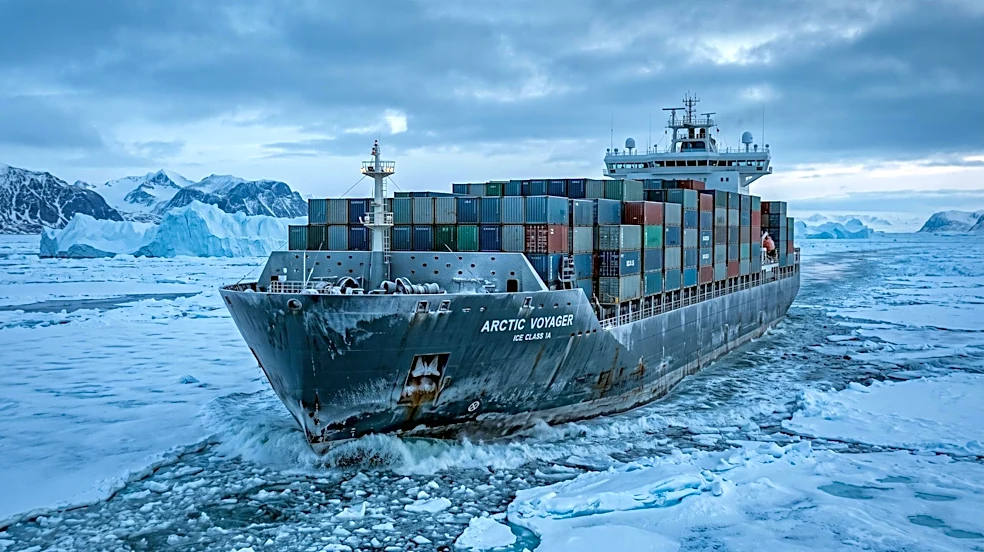
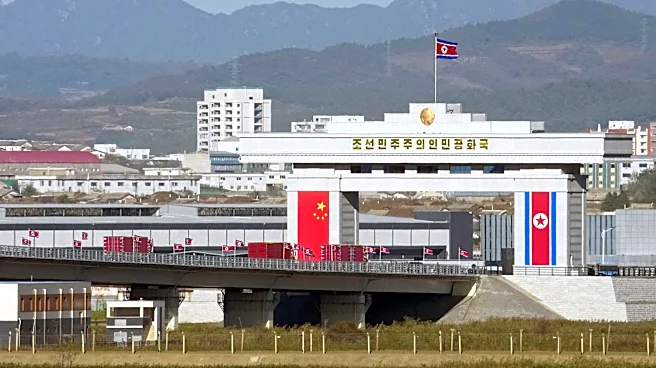
China and Russia are actively developing a new Arctic maritime axis, aiming to integrate China's Maritime Silk Road with Russia's Trans-Arctic Transport Corridor. This initiative, highlighted by Russian President Vladimir Putin’s advisor Nikolai Patrushev’s
recent visit to China, involves proposals for direct container links between Shanghai and Russian ports, investment in Arctic terminals, and the exchange of container-terminal automation technology. The collaboration also extends to shipbuilding, maritime education, and joint research. This strategic alignment is driven by the securitization of supply chains, the increasing accessibility of the Arctic, and the fragmentation of global maritime networks. Both nations seek to enhance their economic and geopolitical security by creating a parallel maritime system that can mitigate risks associated with traditional chokepoints like the Suez Canal and the Strait of Hormuz, especially in the context of ongoing geopolitical disruptions and conflicts.
Why It's Important?
The emerging Arctic maritime axis between China and Russia holds significant geopolitical and economic importance, particularly for the United States and its allies. This collaboration represents a strategic move to diversify global trade routes and reduce reliance on existing maritime chokepoints, which could diminish the influence of Western-controlled shipping lanes. For China, it offers a shorter, more secure route for trade and energy supplies, enhancing its economic resilience. For Russia, Chinese capital, technology, and shipping demand are crucial for developing its ambitious Arctic strategy and transforming the Northern Sea Route into a functional logistics system. The U.S. views the Arctic as an arena of intensifying strategic competition, and this Sino-Russian maritime network, while not explicitly a military alliance, could have dual-use capabilities, strengthening their strategic resilience in a crisis. This development could lead to a fragmentation of the global maritime system into competing networks, impacting international trade, security, and environmental governance in the Arctic region.
What's Next?
The development of the China-Russia Arctic axis will likely continue with increased investment in infrastructure, technology, and logistics. Observers will be watching for concrete steps in linking the Maritime Silk Road with the Trans-Arctic Transport Corridor, including the establishment of new shipping routes, port developments, and technological exchanges. The U.S. and its allies are expected to closely monitor this evolving partnership, particularly any activities that could have military implications or challenge existing international norms in the Arctic. There may be increased patrols by the U.S. Coast Guard and other nations in the Arctic to assert presence and monitor activities. Diplomatic efforts may also intensify to address concerns about the militarization of the Arctic and the potential for a fragmented global maritime system. The long-term success of this axis will depend on overcoming commercial barriers, environmental challenges, and the high costs associated with Arctic shipping, but its strategic direction is clear.
Beyond the Headlines
The quiet emergence of the China-Russia Arctic axis has deeper implications for global governance, environmental sustainability, and the future of international cooperation. Beyond economic and military considerations, the increased shipping activity in the Arctic raises significant environmental concerns, including the impact on fragile ecosystems, indigenous communities, and the acceleration of climate change through increased carbon emissions. The development of new technical standards and logistical architectures by China and Russia could lead to a bifurcation of maritime regulations, potentially undermining international efforts to establish universal safety and environmental protocols. This fragmentation could also challenge the principle of freedom of navigation in international waters, as competing networks might assert different claims or controls. The ethical dimension of exploiting a rapidly melting Arctic for strategic advantage, rather than prioritizing its preservation, will also become a more prominent issue in global discourse, demanding a re-evaluation of national interests versus collective environmental responsibility.