





What's Happening?
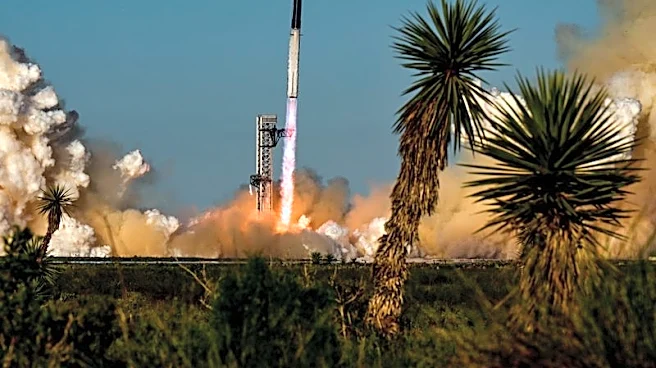
SpaceX conducted a significant test flight of its Starship rocket, successfully deploying several Starlink satellites into orbit. However, the booster rocket, which is a crucial component of the Starship system, experienced a malfunction during its return
and crashed into the Gulf of Mexico. The Starship itself continued its orbital flight as planned. This test is part of SpaceX's ambitious program to develop a fully reusable rocket system capable of launching thousands of satellites and eventually orbital data centers. The company aims for rapid reusability, where both the booster and the Starship can return to the launch site, be caught by mechanical arms, refueled, and relaunched quickly. This particular flight was closely watched for its implications on SpaceX's future revenue growth and its ability to achieve its reusability goals.
Why It's Important?
This Starship test holds significant importance for the future of space travel and the U.S. space industry. The successful deployment of Starlink satellites reinforces SpaceX's dominance in satellite internet services, a key area for future revenue. However, the booster's crash highlights the ongoing challenges in achieving full reusability, which is central to making space launches more frequent and cost-effective. The development of Starship is also critical for NASA, as it plans to use the rocket for future missions, including lunar landings. The potential retirement of SpaceX's current workhorse, the Falcon 9, by 2028, creates a dependency on Starship or other providers like Boeing for transporting astronauts to the International Space Station. The success or failure of Starship's reusability directly impacts the economic viability of future space endeavors and the strategic capabilities of the U.S. in space.
What's Next?
SpaceX will continue to analyze the data from this test flight to understand the cause of the booster's crash and refine its reusability technology. The Starship itself is expected to attempt a controlled re-entry and landing at Starbase, where it will aim to be caught by mechanical arms. The outcome of this landing will be a critical indicator of the program's progress. Future tests will likely focus on perfecting the booster's return and landing procedures. The company's long-term plans involve using Starship to launch a vast number of Starlink satellites and orbital data centers, which will require consistent and rapid reusability. The implications for NASA are also significant, as the agency will be closely monitoring Starship's development to ensure reliable transportation for its astronauts and cargo in the coming years.
Beyond the Headlines
The Starship program represents a paradigm shift in space exploration, pushing the boundaries of what is technologically feasible. The pursuit of full reusability not only aims to drastically reduce launch costs but also to enable more ambitious missions, such as human travel to Mars. The challenges faced, like the booster crash, are inherent in pioneering such complex technology. This endeavor also raises questions about the evolving relationship between private space companies and government agencies like NASA, as the private sector increasingly drives innovation and capabilities. The success of Starship could democratize access to space, fostering new industries and scientific discoveries, while its setbacks underscore the immense engineering and financial investments required to achieve these ambitious goals. The environmental impact of frequent rocket launches and re-entries will also become a more prominent consideration as the technology matures.