
What's Happening?
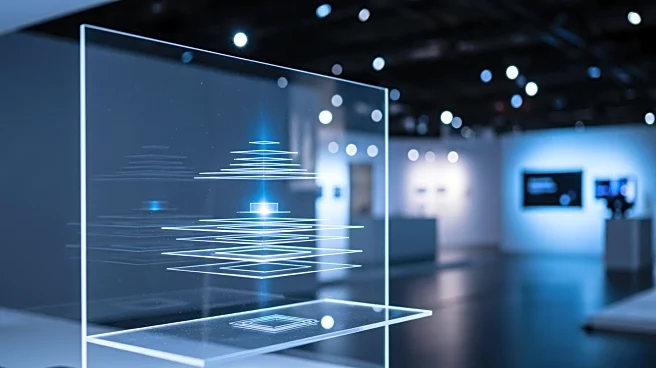
At CES 2026, Leia introduced its Immersity feature, a glasses-free 3D technology that enhances the viewing experience for games and movies. This technology uses spatial AI software and hardware to create
a holographic depth projection, allowing images to appear three-dimensional without the need for glasses or headsets. The technology tracks the viewer's face with cameras, providing a stereo vision experience. Leia's 3D displays are already available on several devices, including the Red Magic Laptop and Samsung Odyssey 3D monitor, and have applications in gaming, education, and medical imaging.
Why It's Important?
Leia's Immersity technology represents a significant advancement in display technology, offering a more immersive experience without the need for additional equipment like glasses or headsets. This innovation could revolutionize the way people interact with digital content, making 3D experiences more accessible and appealing. The technology has the potential to impact various industries, including gaming, education, and healthcare, by providing enhanced visualization capabilities. As the technology becomes more widely available, it could lead to new applications and opportunities for content creators and consumers alike.
What's Next?
As Leia's technology gains traction, it may lead to increased competition in the 3D display market, prompting other companies to develop similar innovations. The adoption of glasses-free 3D displays could drive demand for compatible content, encouraging developers to create new games, movies, and educational materials that leverage this technology. Additionally, as the technology becomes more affordable and accessible, it could become a standard feature in consumer electronics, further integrating 3D experiences into everyday life.