
What's Happening?
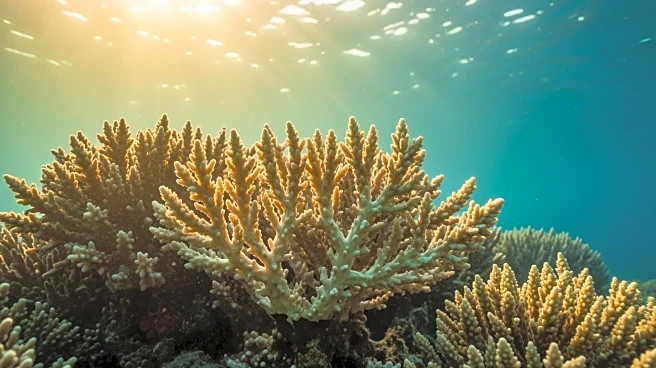
Recent studies indicate that coral reefs worldwide are facing unprecedented levels of bleaching due to record-breaking ocean heatwaves in 2023-24. These heatwaves have affected coral reefs in at least
83 countries, with 84% of the world's coral reefs experiencing 'bleaching-level' heat stress. The situation is exacerbated by the El Niño–Southern Oscillation (ENSO), a natural climate cycle that has intensified due to global warming. Scientists are particularly concerned about the year 2026, which could mark a global tipping point for warm-water coral reefs. This tipping point would mean that even the most resilient coral species might not recover, leading to widespread coral reef collapse.
Why It's Important?
Coral reefs are vital to marine biodiversity, supporting 25% of all marine species despite covering less than 1% of the seafloor. The potential collapse of these ecosystems would have significant ecological and economic impacts. Coral reefs provide essential services such as coastal protection, tourism, and fisheries, which are crucial for the livelihoods of millions of people worldwide. The loss of coral reefs could lead to a decline in fish populations, affecting food security and economic stability in many regions. Additionally, the collapse of coral reefs would signify a major setback in global efforts to combat climate change and preserve biodiversity.
What's Next?
The future of coral reefs depends on several factors, including the frequency and intensity of future El Niño events and global efforts to mitigate climate change. Scientists emphasize the need for aggressive carbon emission reductions to cool ocean temperatures. Local conservation efforts, such as reducing pollution and overfishing, are also critical to enhancing the resilience of coral reefs. Furthermore, innovative approaches like selective breeding of heat-tolerant corals could play a role in restoration efforts. The coming years will be crucial in determining whether these ecosystems can survive the increasing environmental pressures.
Beyond the Headlines
The potential collapse of coral reefs highlights broader environmental challenges, such as ocean acidification and habitat destruction, which threaten marine ecosystems. The situation underscores the interconnectedness of global environmental issues and the need for comprehensive strategies to address them. The plight of coral reefs serves as a stark reminder of the urgent need for international cooperation in tackling climate change and protecting biodiversity. It also raises ethical questions about humanity's responsibility to preserve natural ecosystems for future generations.