








What's Happening?
NATO is revisiting its strategic role in global security, particularly concerning the Strait of Hormuz. Historically, NATO has expanded its operations beyond territorial defense, engaging in crisis-response operations in regions like Bosnia, Kosovo, and Afghanistan.
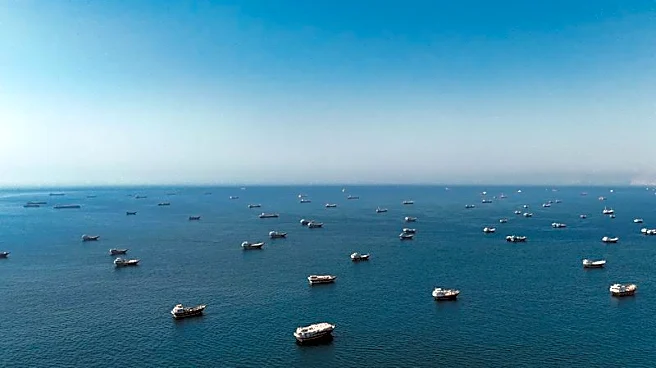
The current debate centers on whether NATO should involve itself in safeguarding navigation in the Strait of Hormuz, a critical maritime chokepoint for global energy trade. This discussion arises amidst concerns over Iran's missile activities and nuclear ambitions, which NATO has identified as direct threats. The alliance's strategic concepts from 1999 and 2010 have already established a framework for operations beyond allied territories, emphasizing collective defense, crisis management, and cooperative security.
Why It's Important?
The Strait of Hormuz is a vital artery for global energy trade, and any disruption could significantly impact energy prices and economic stability across the Euro-Atlantic area. NATO's involvement in the region could enhance maritime security and ensure the free flow of trade, which is crucial for global economic stability. However, this move also raises questions about NATO's strategic priorities and the balance between territorial defense and global security operations. The decision to engage in Hormuz reflects NATO's broader mission to address security challenges that transcend regional boundaries, reinforcing its relevance in a rapidly interconnected world.
What's Next?
NATO's potential involvement in Hormuz could lead to increased collaboration with regional partners and a reevaluation of its strategic priorities. The alliance may need to navigate political and operational challenges, balancing its core mission of territorial defense with the need to address global security threats. Future discussions will likely focus on the extent of NATO's engagement in non-territorial operations and the implications for its long-term strategic objectives.