
What's Happening?
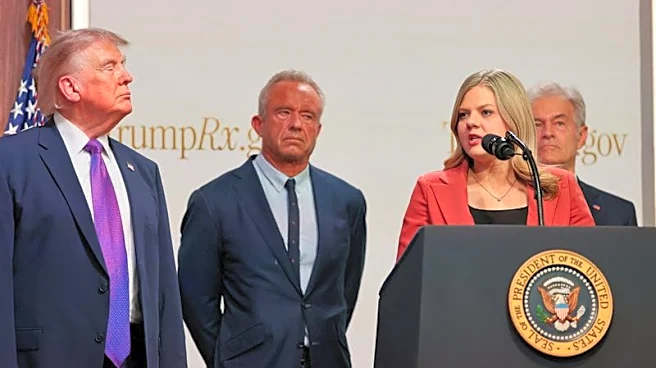
Senator Michael Bennet (D-CO), Senate Democratic Leader Chuck Schumer (D-NY), and Representative Kim Schrier (D-WA), along with 88 congressional colleagues, have formally demanded that President Trump
rescind his executive order concerning childhood vaccine recommendations. The executive order directs federal health agencies to overhaul existing childhood vaccine guidelines and encourages states to reconsider school immunization requirements. The lawmakers argue that this order creates confusion and chaos, especially as families prepare for the school year, and undermines science-based recommendations crucial for protecting children and communities from preventable diseases. They highlight that the U.S. is currently experiencing its highest surge in measles cases in 35 years, with an increasing number of states declaring public health emergencies. The letter criticizes the order for overriding decades of scientific evidence and promoting an anti-vaccine ideology, particularly noting the actions of U.S. Department of Health and Human Services Secretary Robert F. Kennedy Jr.
Why It's Important?
This executive order is deemed critical because it directly challenges established public health policy and scientific consensus regarding childhood vaccinations. The potential for a decline in vaccination rates could lead to a resurgence of preventable diseases, increasing healthcare costs, and disruptions in schools due to outbreaks. The order's push to break up combination vaccines into single-disease doses is problematic, as leading medical professionals agree on the safety and efficacy of combination vaccines, and single-disease options for routine childhood vaccines like MMR are not readily available in the U.S. market. This could impose significant financial and logistical burdens on families, particularly those with low incomes, by requiring multiple doctor visits and co-pays. Furthermore, directing the Department of Justice to challenge state school immunization requirements could create a chaotic and inconsistent public health landscape, jeopardizing the health and safety of American children.
What's Next?
The lawmakers are urging President Trump to immediately rescind the executive order and restore evidence-based decision-making to federal public health policy. They warn that every day the order remains in effect, more children are at risk of going unvaccinated, increasing the likelihood of disease outbreaks. The demand for rescission could lead to a political standoff between Congress and the Administration over public health policy. It may also prompt further public debate and advocacy from medical and public health organizations. The long-term implications could include legal challenges to the executive order or state-level actions to either uphold or reconsider immunization requirements, depending on the political climate and public health outcomes.
Beyond the Headlines
Beyond the immediate public health concerns, this situation highlights a broader societal tension between scientific authority and political ideology. The executive order, and the actions of Secretary Kennedy, represent a significant challenge to the established role of scientific evidence in policymaking. This could erode public trust in federal health agencies and scientific institutions, making it harder to address future public health crises. The debate also touches on parental rights versus community health responsibilities, and the role of government in mandating health interventions. The politicization of vaccines could have lasting effects on public health infrastructure, research funding, and the ability of the U.S. to maintain high vaccination rates, potentially impacting global health security.