







What's Happening?
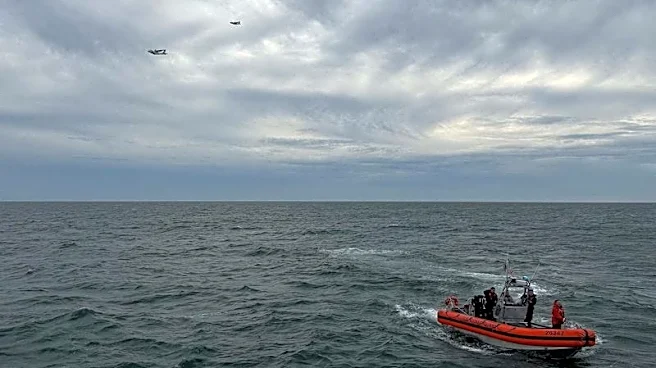
The U.S. Coast Guard is conducting an ongoing search operation off the Massachusetts coast for a Gulfstream G100 medical flight that disappeared en route from Bermuda to Boston. The Federal Aviation Administration (FAA) lost contact with the aircraft,
carrying four Canadian and two Bermudian nationals, at 2 a.m. Saturday. Search crews later located a debris field off the coast of Nantucket. The plane's pilot had reported electrical problems and declared an emergency as the jet approached the coast, with air traffic control audio indicating the pilot might have been "coming in blind" amidst a looming storm. Preliminary flight tracking data from FlightRadar24 shows the plane descended sharply from approximately 24,000 feet to 10,000 feet. The search area spans 2,840 square miles (7,356 square kilometers) and involves fixed-wing aircraft, helicopters, boats, and cutters from the Coast Guard, New York National Guard's Air Rescue Wing, and Massachusetts authorities. The depth of the water around the debris field is 80 to 90 feet, and the Coast Guard plans to deploy sonar to search the seabed.
Why It's Important?
This incident highlights the critical nature of aviation safety protocols and emergency response mechanisms, particularly for medical transport flights. The disappearance of a plane with six individuals on board, coupled with reports of electrical problems and a sharp descent, underscores the inherent risks in air travel and the importance of robust maintenance and communication systems. The extensive search operation, involving multiple agencies and significant resources, demonstrates the commitment to locating the aircraft and its occupants, as well as the challenges posed by vast oceanic search areas. The potential loss of navigational instruments during a storm, as suggested by an aviation attorney, points to severe hazards that can quickly escalate into catastrophic events, emphasizing the need for advanced weather forecasting and pilot training for adverse conditions. The involvement of Canadian and Bermudian nationals also brings an international dimension to the search and rescue efforts.
What's Next?
The U.S. Coast Guard will continue its search and rescue operations, with plans to deploy sonar to scour the seabed floor in the area where debris was found. Coast Guard Capt. John McTamney, chief of response for the northeast district, stated that search efforts will persist until there is confidence that any potential survivors on the water's surface would have been found. The Coast Guard is also maintaining communication with the next of kin of those aboard the Canadian-registered air ambulance jet. Further investigations will likely focus on the cause of the electrical problems and the rapid descent, potentially involving the FAA and other aviation authorities. The recovery of the aircraft's flight recorders, if possible, will be crucial in understanding the sequence of events leading to its disappearance. The incident may also prompt a review of flight safety procedures for medical transport and flights operating in challenging weather conditions.
Beyond the Headlines
The disappearance of the medical flight raises broader questions about the resilience of aviation technology in extreme conditions and the psychological toll such incidents take on the families of those involved. The mention of the pilot potentially "coming in blind" due to electrical issues and a storm highlights the vulnerability of even modern aircraft to a confluence of technical failures and environmental factors. This event could lead to discussions within the aviation industry about enhancing redundant systems for critical flight instruments and improving real-time weather data integration for pilots, especially for flights over open water. Furthermore, the incident underscores the often-overlooked dangers faced by air ambulance crews, who operate under demanding circumstances to provide critical medical transport. The extensive, multi-agency search also reflects the complex coordination required for international search and rescue missions, emphasizing the importance of cross-border cooperation in aviation emergencies.