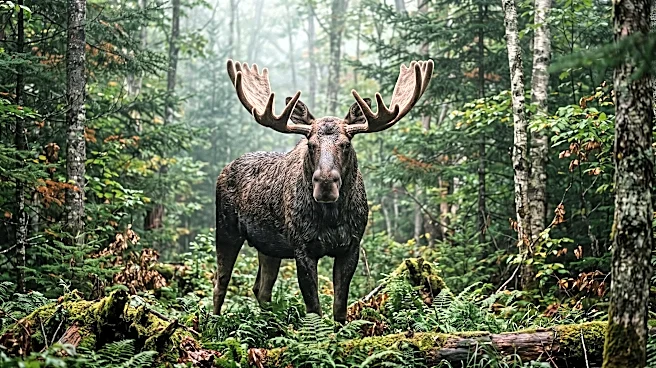










What's Happening?
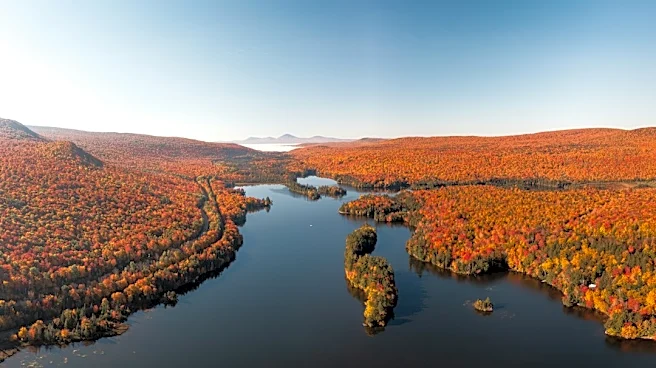
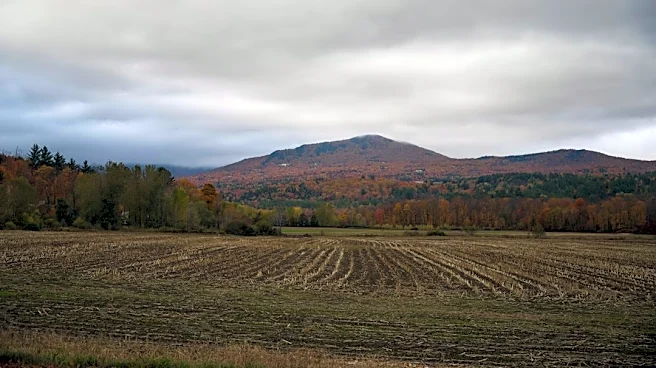
The Vermont Fish and Wildlife Department has concluded its moose hunting season, having issued 85 permits this year, a significant reduction from the 180 permits annually approved since 2023. This decision is part of a long-standing strategy, initiated
in 1993, to manage the moose population in the Northeast Kingdom and mitigate the impact of winter ticks, also known as moose ticks. According to Nick Fortin of Vermont Fish and Wildlife, a single moose can host over 40,000 ticks, and an overpopulation of moose leads to a higher tick burden, severely affecting the animals' health. The department aims to maintain a moose population level that reduces tick numbers, thereby protecting the overall health of the moose. The decrease in permits indicates that the state's efforts to lower the moose population are nearing their target, with observed declines in tick numbers correlating with reduced moose populations.
Why It's Important?
This initiative is crucial for ecological balance and wildlife management in Vermont. The unchecked proliferation of winter ticks due to an abundant moose population poses a significant threat to the health and survival of moose, potentially leading to widespread illness and mortality among the animals. By strategically managing the moose population through controlled hunting, the Vermont Fish and Wildlife Department is actively working to reduce tick infestations, which in turn helps to preserve the moose population's long-term viability. This approach highlights the complex interplay between wildlife populations, parasites, and environmental health. The success of this program could serve as a model for other regions facing similar ecological challenges, demonstrating how regulated hunting can be a vital tool in conservation efforts rather than solely a recreational activity.
What's Next?
The Vermont Fish and Wildlife Department will continue to monitor the moose population and tick numbers to assess the effectiveness of their management strategies. Future hunting permit allocations will likely be adjusted based on these ongoing assessments, with the goal of further stabilizing the moose population and minimizing tick impact. Nick Fortin indicated that while progress has been made, it may take more time to reach the desired ecological balance. The annual permitting process, which operates on a lottery basis for both in-state and out-of-state residents, will continue to be a key mechanism for controlling the moose harvest. The department will also likely continue to educate the public on the importance of these conservation efforts and the role of regulated hunting in maintaining a healthy ecosystem.
Beyond the Headlines
The situation in Vermont underscores a broader ecological challenge faced by wildlife managers across North America: how to balance human activities, wildlife populations, and environmental health in the face of changing climate patterns and increasing parasite burdens. The winter tick issue is exacerbated by milder winters, which allow more ticks to survive and thrive, further stressing moose populations. This highlights the interconnectedness of climate change, wildlife health, and conservation strategies. The use of hunting as a conservation tool, while sometimes controversial, demonstrates a pragmatic approach to managing complex ecological problems. It also brings to light the economic and cultural aspects of hunting, as it provides both a means of population control and a traditional activity for many, with services like horse-drawn hauling supporting the logistical challenges of moose hunting.