



What's Happening?
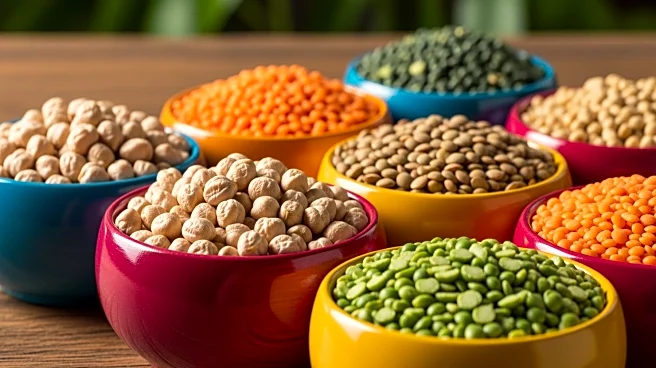
India is embarking on a 'Pulses Revolution' to achieve self-sufficiency in dal production, reducing its reliance on imports. The initiative, part of the Mission for Aatmanirbharta in Pulses, aims to increase domestic production to 350 lakh tonnes by 2030-31.
The program includes providing free seed kits, certified seeds, and assured procurement at minimum support prices for key pulses like tur, urad, and masoor. This policy shift is designed to boost productivity and expand cultivation, ultimately making India a major player in the global pulse market.
Why It's Important?
India's move towards self-sufficiency in pulse production has significant implications for its agricultural sector and food security. By reducing import dependence, India can stabilize domestic prices and protect farmers from global market volatility. The initiative also promotes sustainable agricultural practices, as pulses improve soil health and require less water compared to other crops. This shift could lead to a more resilient agricultural system, supporting millions of farmers and contributing to the country's economic growth. Additionally, it positions India to potentially become a net exporter of pulses, influencing global markets.