





What's Happening?
The Mesa County Coroner has ruled the death of a 32-year-old Colorado Springs woman in a July crash near the Utah border as an intentional act. The Colorado State Patrol (CSP) confirmed this ruling on Monday. The incident, which occurred on July 20, involved
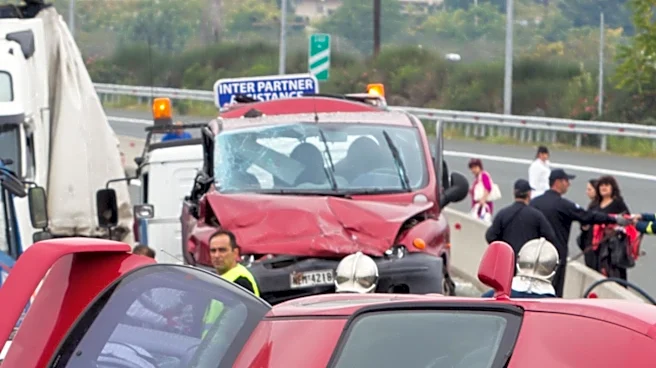
the woman's Subaru Outback striking a Ford F-150 truck head-on. Following the collision, the Outback spun out, traveled down an embankment, flipped onto its side, and caught fire. A toxicology report indicated that the driver had a blood alcohol content (BAC) of 0.235. The 40-year-old male driver of the Ford F-150, from Thornton, sustained serious injuries, as did three passengers in the truck: a 32-year-old woman, a 24-year-old woman, and three juveniles.
Why It's Important?
The ruling of this fatal crash as an intentional act, coupled with the driver's high blood alcohol content, highlights critical public safety and mental health concerns. The incident resulted in not only the driver's death but also serious injuries to multiple occupants of the other vehicle, including juveniles, underscoring the devastating consequences of impaired and intentional driving behaviors. This event brings to the forefront the intersection of mental health crises and substance abuse, and their potential to lead to tragic outcomes on public roadways. It also emphasizes the importance of support systems for individuals struggling with mental health issues and the need for continued efforts to prevent impaired driving. The involvement of multiple victims, particularly children, amplifies the community impact and the need for resources for those affected by such traumatic events.
What's Next?
Following the Mesa County Coroner's ruling, the Colorado State Patrol will likely conclude its investigation into the crash, with the intentional act and high BAC being key factors. While the driver is deceased, the focus may shift to supporting the injured victims and their families. Public awareness campaigns regarding impaired driving and mental health resources may be reinforced in the community. The incident could also prompt discussions among law enforcement and public health officials about strategies to address the underlying causes of such intentional acts, including access to mental health services and substance abuse prevention programs. The tragic nature of the event will likely serve as a somber reminder of the importance of responsible driving and seeking help for mental health challenges.
Beyond the Headlines
This incident delves into the complex and often tragic intersection of mental health, substance abuse, and public safety. The ruling of an intentional act suggests a deeper crisis beyond a typical impaired driving incident, pointing to potential suicidal ideation or extreme distress. This raises profound ethical and societal questions about how communities identify and support individuals at risk of harming themselves or others, especially when those actions impact innocent bystanders. The high BAC further complicates the understanding of the driver's state of mind and decision-making capacity. This event underscores the critical need for accessible and comprehensive mental health services, crisis intervention, and public education on the signs of distress. It also highlights the ripple effect of such tragedies, impacting not only the immediate victims but also first responders, medical personnel, and the broader community grappling with the aftermath of such a devastating and intentional act.