



What's Happening?
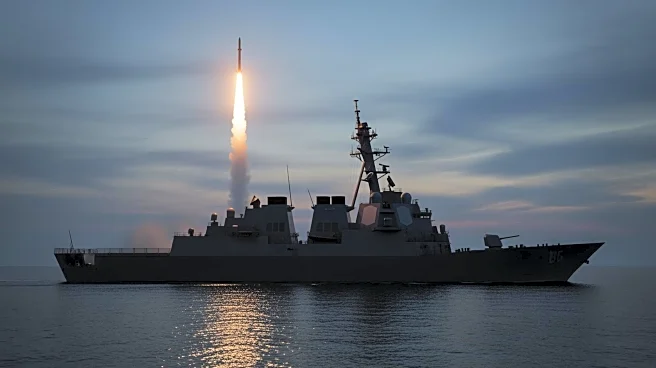
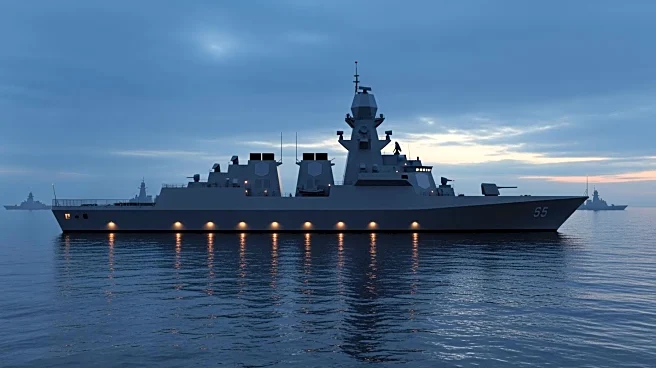
North Korea has successfully conducted operational evaluation tests for its new 5,000-ton missile destroyer, named Choe Hyon, at the Nampo Shipyard. The tests, which took place over two days, included maneuverability assessments and the launch of cruise
missiles. North Korean leader Kim Jong Un attended the tests, expressing satisfaction with the progress and declaring the tests a success. The destroyer, launched last year, is part of North Korea's efforts to enhance its maritime defense capabilities. During his visit, Kim also inspected the third ship of the class, currently under construction, and praised the efficiency of the workers. He announced plans to build two warships of this class or higher each year during the new five-year plan period, aiming to establish a powerful navy capable of long-distance operations.
Why It's Important?
The successful testing of the new destroyer signifies North Korea's ongoing efforts to bolster its military capabilities, particularly its naval forces. This development is significant as it highlights North Korea's focus on expanding its maritime defense and offensive capabilities, which could alter the balance of power in the region. The emphasis on building a fleet of blue ocean vessels capable of long-distance operations suggests a strategic shift towards projecting power beyond its immediate borders. This move could have implications for regional security dynamics, potentially prompting neighboring countries and the international community to reassess their security strategies and diplomatic approaches towards North Korea.
What's Next?
Following the successful tests, North Korea plans to continue its naval expansion by constructing additional warships. Kim Jong Un has instructed the shipyard to launch the third vessel before October 10, a significant date marking Party Foundation Day. This deadline underscores the regime's commitment to rapidly advancing its naval capabilities. The international community, particularly countries in the Asia-Pacific region, may closely monitor these developments and consider diplomatic or military responses to address potential security concerns. Additionally, North Korea's actions could influence ongoing discussions about denuclearization and regional stability.
Beyond the Headlines
The expansion of North Korea's naval capabilities raises questions about the country's long-term strategic goals and its impact on global maritime security. The focus on building a powerful navy capable of long-distance operations suggests a desire to assert influence in international waters, potentially challenging existing maritime norms and alliances. This development also highlights the challenges of addressing North Korea's military ambitions through diplomatic means, as the regime continues to prioritize military advancements despite international sanctions and diplomatic efforts. The situation underscores the need for a coordinated international response to address the potential security threats posed by North Korea's expanding military capabilities.