




What's Happening?
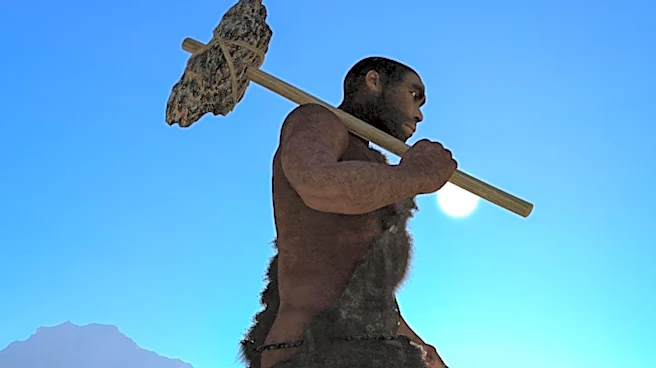
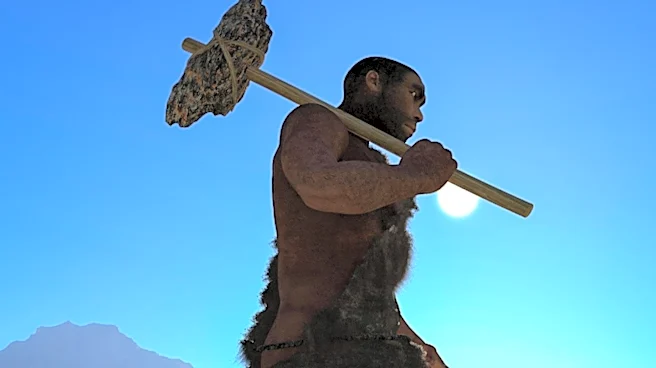
Developing research indicates that interbreeding between Neanderthals and modern humans was not random but rather a socially patterned and directional process, more intricate than commonly understood. Genetic studies have confirmed that Neanderthals and Homo
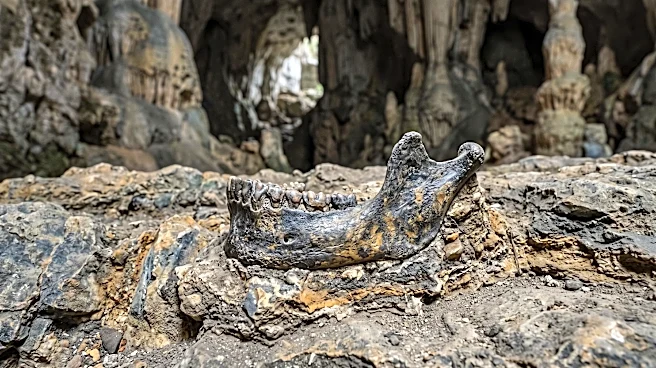
sapiens interbred across tens of thousands of years and multiple continents, with approximately 2% of the non-African human genome today carrying Neanderthal DNA. However, there is no archaeological site showing them living together. New findings from the X chromosome suggest a persistent mating preference: males with more Neanderthal ancestry tended to reproduce with females with more modern-human ancestry. This pattern appeared in at least two distinct mating periods, separated by around 200,000 years. The genetic data is consistent with an asymmetry where gene flow moved more successfully through Neanderthal males and H. sapiens females than the reverse. This challenges previous hypotheses that focused solely on negative selection as the reason for less Neanderthal DNA on the X chromosome.
Why It's Important?
This research significantly advances our understanding of human evolution and the complex interactions between different hominin groups. The discovery of a directional mating preference, where Neanderthal males and modern-human females were more likely to produce surviving offspring, provides a new lens through which to view ancient social structures and biological compatibilities. It suggests that the success of hybrid pregnancies might have depended on which species was the father and which was the mother, potentially due to biological factors like genomic imprinting or issues with fetal growth and pregnancy complications. This understanding helps to explain the observed genetic patterns and offers insights into the demographic dynamics of the time. Furthermore, the study highlights that while some hybrids survived, they did not thrive, as Neanderthal ancestry in human populations eroded quickly, indicating potential health problems for hybrid individuals. This sheds light on the evolutionary pressures that shaped the modern human genome.
What's Next?
Distinguishing between social behavior and biological incompatibility as the primary driver for the observed mating patterns will require more Neanderthal genomes from the critical period of contact, ideally spanning multiple geographic regions. Researchers like Fernando Villanea suggest that the numerical imbalance, with a growing human population encountering a vanishing minority of Neanderthals, likely led to human groups absorbing surviving Neanderthal individuals and raising their children. Future studies will aim to clarify whether the observed genetic asymmetry was due to social preferences, such as Neanderthal males leaving their birth groups, or biological factors that made certain pairings more viable. The lack of archaeological evidence showing cultural exchange between the two groups, as seen at sites like Grotte Mandrin, further complicates the picture, suggesting proximity without fusion. Continued interdisciplinary research, combining genetics, demography, and archaeology, will be crucial to unraveling the full story of Neanderthal-human interactions.
Beyond the Headlines
The study's findings prompt deeper reflection on the ethical and social dimensions of ancient interbreeding. While genetic data can reveal who reproduced with whom, it cannot definitively answer whether these encounters were consensual, coerced, or simply a matter of circumstance. The concept of 'gene flow' and 'mating preference' in ancient contexts raises questions about agency and power dynamics between different hominin groups. The observation that Neanderthal males were more closely related to each other than Neanderthal females, suggesting a patrilocal social structure where females moved between groups, adds another layer of complexity. This contrasts with the more flexible social structures of modern humans, which may have made them better able to absorb outside individuals. Ultimately, the research underscores that while genes preserve what was transmitted, the full lived experience of ancient societies, including culture, desire, and intent, remains largely beyond the reach of genetic analysis, requiring careful interpretation and avoiding anachronistic assumptions.