



What's Happening?
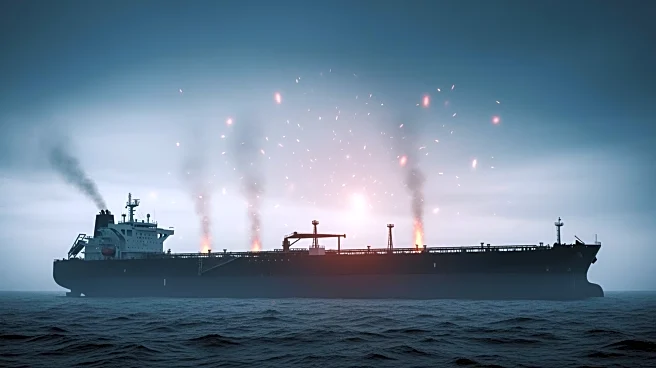
An oil tanker, the Sonangol Namibe, suffered an explosion off the coast of Iraq, marking the first such incident in the northern Persian Gulf since the U.S. and Israel began military actions against Iran. The tanker, approached by a small boat, experienced
a loud bang, resulting in a breached hull and water loss from a ballast tank. Despite initial concerns, there were no reports of oil pollution as the tanker was not carrying cargo. The incident is part of a series of attacks on vessels in the region, indicating the conflict's expansion into the Persian Gulf.
Why It's Important?
The explosion on the Sonangol Namibe underscores the increasing risks to shipping in the Persian Gulf, a critical region for global oil supply. The incident highlights the vulnerability of maritime routes to military conflicts, potentially disrupting oil transportation and affecting global energy markets. The attack also raises concerns about the safety of commercial vessels operating in the region, prompting calls for enhanced security measures. The ongoing conflict could lead to increased insurance costs and operational challenges for shipping companies.
What's Next?
The incident may prompt regional and international stakeholders to reassess maritime security strategies in the Persian Gulf. Shipping companies might implement additional safety protocols, while governments could increase naval patrols to protect commercial vessels. The conflict's escalation could lead to further disruptions in oil supply, impacting global energy prices. Diplomatic efforts may be necessary to de-escalate tensions and ensure the safety of maritime routes.