




What's Happening?
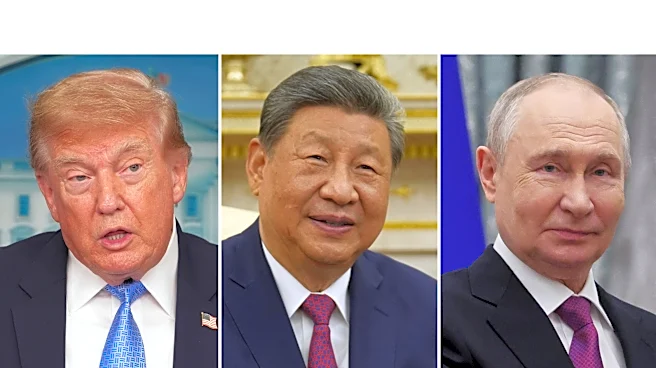
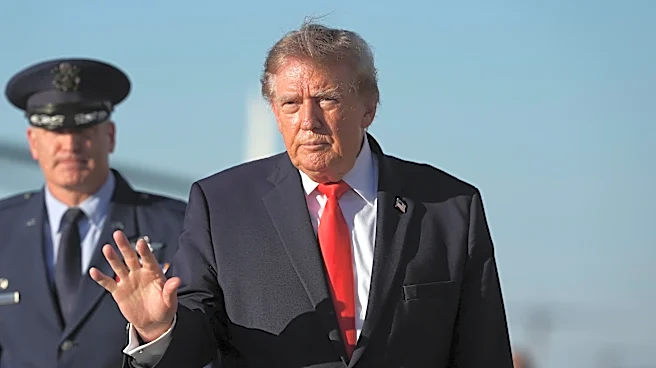
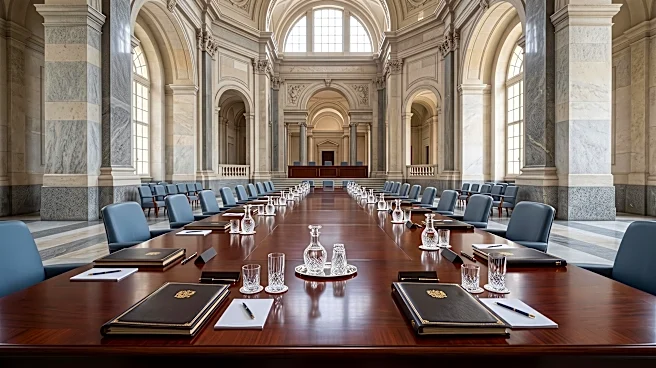
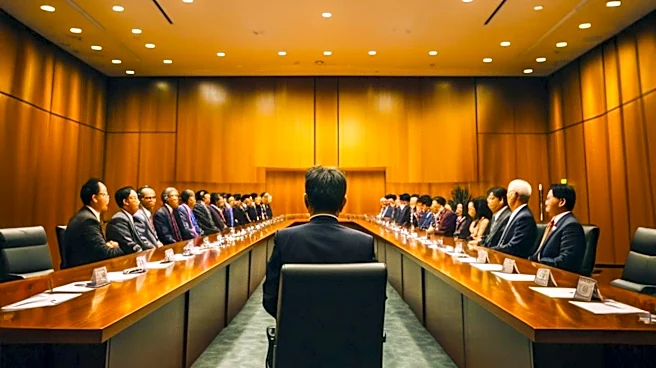
President Xi Jinping will host President Trump and Russian President Vladimir Putin at a three-way summit on the sidelines of the APEC meeting in Shenzhen, China, on November 19. This meeting, initially leaked by Kremlin officials in September, has sparked
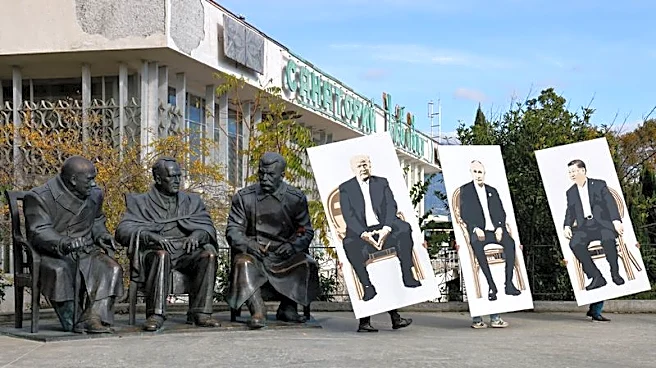
considerable speculation across NATO capitals, with some drawing comparisons to the 1945 Yalta Conference. However, Russian spokesman Dmitry Peskov has dismissed such comparisons as 'political science exercises.' U.S. officials have indicated that the war in Ukraine is not expected to be a central topic. The summit is seen by some as a potential photo-op in the 'lame-duck stretch of the receding Trump era,' while others view it as a significant geopolitical event. The Russian delegation will be substantial, including several high-ranking officials and business leaders.
Why It's Important?
This trilateral summit is highly significant for several reasons. For President Putin, it offers a crucial opportunity to break from diplomatic isolation and sanctions following the invasion of Ukraine, and to project Russia as a major global power. For President Trump, it provides a high-profile diplomatic engagement that could underscore his continued influence on the global stage. China, as the host, aims for a stable relationship with the U.S. for economic momentum and to assert its growing role in international affairs. The meeting could be interpreted as a challenge to the existing international rules-based order, which President Putin has long resented and President Trump has shown willingness to question. The symbolic nature of the summit, regardless of substantive outcomes, could influence global perceptions of power dynamics and alliances.
What's Next?
The summit is scheduled for November 19 in Shenzhen. The immediate aftermath will involve close scrutiny of any joint statements, press conferences, or diplomatic signals emerging from the meeting. Observers will be looking for indications of shifts in international relations, particularly concerning global security, economic cooperation, and regional influences. The extent to which the leaders address or avoid contentious issues will be key. Reactions from other global powers, especially European nations and NATO, will be important in assessing the broader impact of the summit. The meeting could set a precedent for future high-level engagements between these nations, potentially shaping the trajectory of international diplomacy in the coming years.
Beyond the Headlines
Beyond the immediate political implications, this summit delves into deeper ideological and geopolitical currents. The meeting of President Trump, President Putin, and President Xi, all leaders with distinct approaches to global governance, could signal a move towards a world defined by 'spheres of influence' rather than a unified international order. The underlying disdain for traditional democratic norms, as attributed to President Trump and President Putin by some analysts, suggests a potential shift towards a 'might is right' philosophy in international relations. This could have long-term consequences for human rights, international law, and the stability of smaller nations. The summit might also highlight the growing economic and technological competition between these powers, particularly in areas like artificial intelligence and critical technologies, further shaping the global landscape.