





What's Happening?
A 1952 United States Army film titled 'Japanese Bride in America' chronicles the journey of a Japanese woman who marries an American serviceman and relocates to the U.S. The film, produced by the U.S. Army Signal Corps’ Civil Affairs Division, was likely
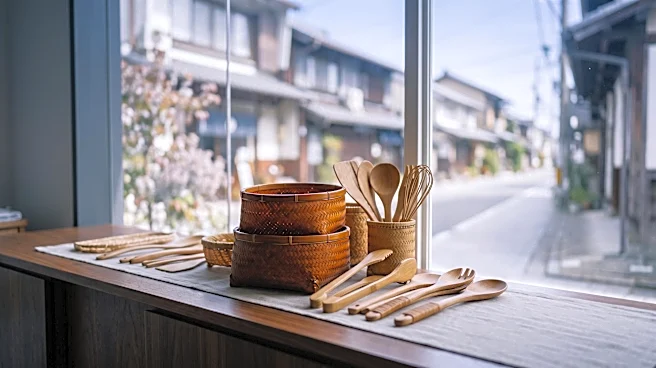
intended for Japanese women and their families. It tells the story of Miwako, who moves to Cleveland, Ohio, and faces the challenges of adapting to American life, including language barriers. While the film portrays a generally welcoming environment, it does not shy away from the difficulties of cultural adjustment. Miwako eventually integrates into her new community, particularly after she and her husband establish a business selling bamboo housewares. This film emerged after World War II, a period when many GIs stationed in Japan married Japanese women, and the 1952 McCarran-Walter Act removed previous legal obstacles to their immigration.
Why It's Important?
This historical film offers a unique glimpse into the post-World War II social landscape of the United States and the experiences of Japanese war brides. For U.S. society, it highlights the early stages of multicultural integration and the challenges faced by immigrants in a new country. The film's production by the U.S. Army suggests an official effort to facilitate the assimilation of these new residents, underscoring the government's role in managing the social consequences of military presence abroad. The narrative of Miwako's struggle and eventual success in starting a business also reflects the entrepreneurial spirit often found within immigrant communities and their contributions to the U.S. economy. It provides valuable context for understanding the evolution of U.S. immigration policies and societal attitudes towards diverse populations.
What's Next?
While 'Japanese Bride in America' is a historical document, its themes of immigration, cultural adaptation, and the challenges of integration remain relevant today. The film serves as a historical precedent for understanding the ongoing debates and policies surrounding immigration in the U.S. It can be used in educational contexts to illustrate the human aspect of immigration and the long-term impacts of international conflicts on individual lives and national demographics. The film's availability through the National Archives ensures its continued use as a resource for researchers and the public interested in U.S. social history and the experiences of immigrant communities.
Beyond the Headlines
The film's portrayal of Miwako's journey, particularly her struggle with the English language and eventual success in business, delves into the deeper psychological and social aspects of cultural assimilation. It implicitly addresses the concept of 'otherness' and the efforts required to bridge cultural divides. The fact that the U.S. Army produced such a film suggests a recognition of the social responsibilities accompanying military deployments and the subsequent impact on families. This historical artifact can spark discussions about the ethical considerations of military presence in foreign countries and the long-term societal changes that result from such interactions, including the formation of new multicultural identities within the U.S.