





What's Happening?
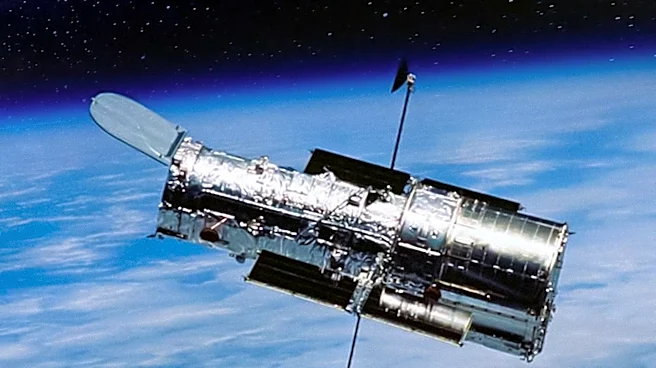
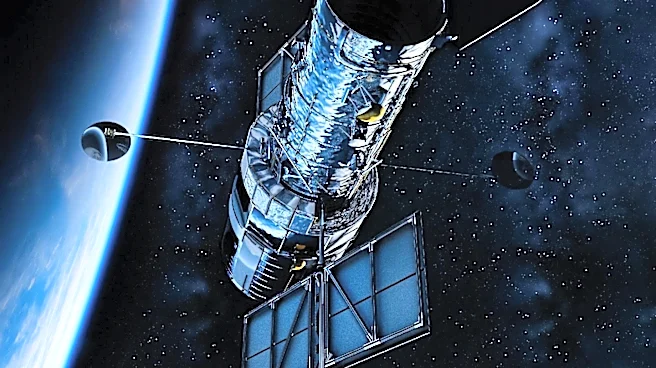
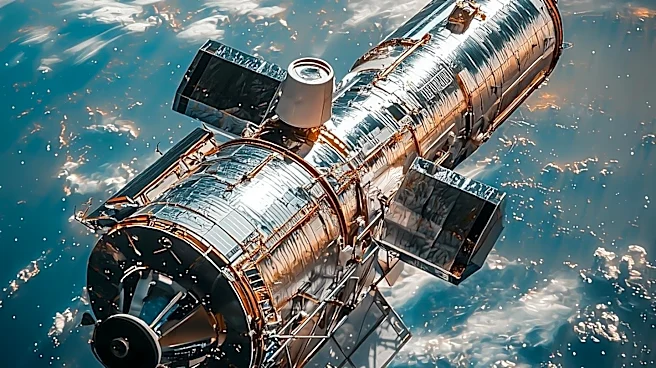
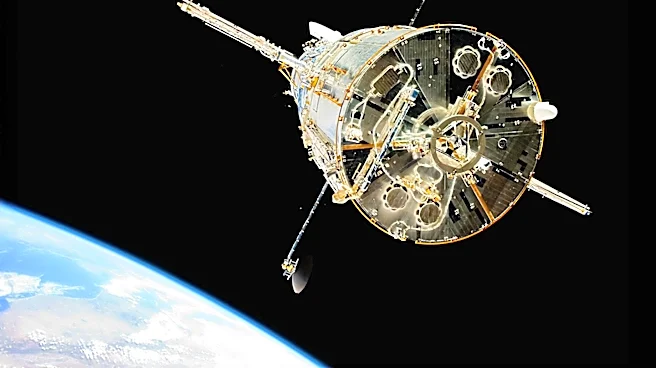
NASA has issued a Request for Information (RFI) to commercial space companies, seeking proposals to rescue the Hubble Space Telescope from atmospheric decay. The RFI, released on October 29, 2026, asks industry to outline capabilities for capturing Hubble,
boosting its orbit to at least 600 km (approximately 373 miles), and completing the mission by 2032. Currently, Hubble orbits at around 470 km. The agency is exploring three primary options: a reboost to a higher orbit, a servicing mission to upgrade performance and extend its operational life, or a controlled deorbit for safe reentry. NASA Administrator Jared Isaacman emphasized the value of Hubble's ongoing scientific contributions and the agency's responsibility to explore cost-effective ways to extend its life. Nicky Fox, who leads NASA’s Science Mission Directorate, highlighted the rapid advancements in commercial satellite servicing capabilities. Responses to the RFI are due by November 30, 2026, and NASA has not allocated a budget or selected a vendor, indicating this is a market probe to gather ideas and cost estimates.
Why It's Important?
This initiative is crucial for the future of U.S. space science and the commercial space industry. Extending Hubble's operational life by an estimated 25 years could bridge a significant gap in space-based observation until its successor, the Habitable Worlds Observatory, is expected in the 2040s. Without intervention, Hubble is projected to reenter Earth's atmosphere in the early to mid-2030s. For the commercial space sector, this RFI signals a growing market for on-orbit servicing, validating the capabilities of companies specializing in satellite capture, rendezvous, and repair. It offers a high-profile opportunity for firms like SpaceX, Astroscale, Momentus, Northrop Grumman, Starfish Space, and Katalyst Space Technologies to demonstrate their technologies. A successful commercial mission would not only save a vital scientific asset but also establish a precedent for future public-private partnerships in space, potentially reducing costs and accelerating mission timelines for other government and commercial satellites.
What's Next?
Following the November 30, 2026, deadline for RFI responses, NASA will evaluate the submitted proposals, focusing on technical feasibility, cost-effectiveness, and the ability to meet the 2032 completion target. The agency will then need to secure funding for any selected mission, which will likely involve discussions with Congress for appropriations. The RFI allows for both crewed and robotic mission plans, and NASA's decision on which approach to pursue will depend on the proposals received and the associated risks and costs. If a reboost proves too expensive or complex, a controlled disposal mission remains a fallback option to mitigate the risk of an uncontrolled reentry. The outcome of this RFI will significantly influence the trajectory of commercial space servicing and NASA's strategy for managing aging space assets.
Beyond the Headlines
The effort to save Hubble reflects a broader shift in how NASA approaches complex space missions, increasingly leveraging the capabilities and innovation of the private sector. This move highlights the evolving relationship between government space agencies and commercial entities, where the latter are no longer just contractors but potential partners in critical scientific endeavors. The challenge of safely capturing and servicing a 36-year-old spacecraft not originally designed for robotic docking presents significant engineering hurdles, pushing the boundaries of current in-space servicing technology. Furthermore, the decision to invest in Hubble's extension underscores the immense scientific value of long-duration observatories and the desire to maximize returns on taxpayer investments in space infrastructure. The success or failure of this initiative could set a precedent for how other aging, yet still valuable, space assets are managed in the coming decades.