
What's Happening?
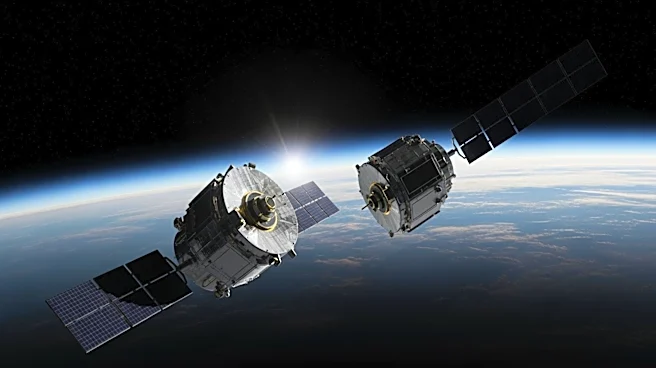
A new study warns that a major disruption in satellite control could lead to a catastrophic collision in low Earth orbit within 2.8 days. The risk is heightened by the increasing number of mega constellations,
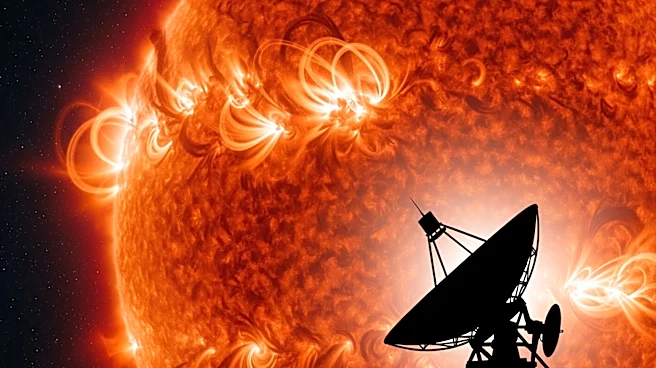
which are large networks of satellites that add congestion to the orbital environment. These satellites support various services, including internet access and weather monitoring, but also increase the risk of collisions. The study introduces the Collision Realization And Significant Harm (CRASH) Clock, which estimates the time until a serious collision could occur if satellite control is lost. The study highlights the vulnerability of low Earth orbit, which relies on precise control to prevent collisions. A major solar storm could disrupt this control, leading to increased atmospheric drag and unpredictable satellite paths.
Why It's Important?
The potential for a catastrophic collision in low Earth orbit poses significant risks to global communications, navigation, and other satellite-dependent services. A collision could generate thousands of debris fragments, further complicating satellite operations and increasing the risk of future collisions. The study underscores the importance of maintaining control over satellite operations, especially during solar storms, which can disrupt navigation and communication systems. The findings highlight the need for improved satellite management and collision avoidance strategies to prevent a crisis in orbit.