
What's Happening?
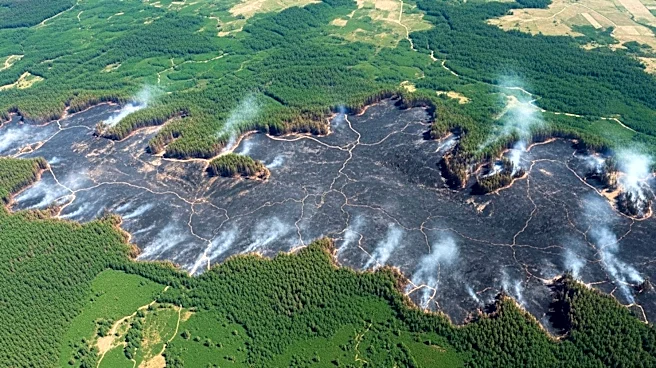
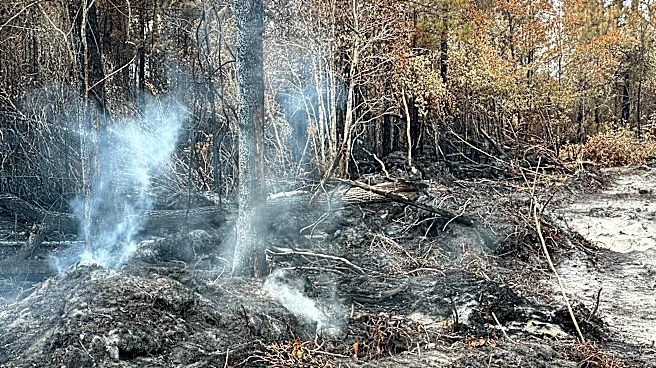
Georgia officials have warned that wildfires remain a significant threat despite recent rains that have helped contain two large fires in the state. The Brantley County fire, which has burned approximately
35 square miles and destroyed over 80 homes, is now 32% contained. Meanwhile, a larger fire at the Georgia-Florida line has charred more than 50 square miles and is 23% contained. The fires have been fueled by extreme drought conditions, gusty winds, and climate change. While no injuries have been reported in Georgia, a volunteer firefighter in Florida died from a medical emergency while fighting a brush fire. Evacuation orders have been lifted for some residents, but officials caution that the situation remains volatile.
Why It's Important?
The ongoing wildfires in Georgia highlight the increasing risk of natural disasters exacerbated by climate change and extreme weather conditions. These fires pose a threat to public safety, property, and the environment, with significant implications for local communities and emergency response efforts. The situation underscores the need for effective wildfire management strategies and preparedness plans to mitigate the impact of such disasters. The economic and social costs of wildfires are substantial, affecting insurance markets, property values, and community resilience. As climate change continues to influence weather patterns, the frequency and intensity of wildfires are likely to increase, necessitating proactive measures from policymakers and stakeholders.
What's Next?
Firefighters in Georgia are preparing for a prolonged battle against the wildfires, with forecasts indicating a high chance of more rain and potential thunderstorms, which could ignite new fires. Continued efforts to contain the fires and protect communities are critical. Authorities are monitoring weather conditions closely and advising residents to remain vigilant and prepared for possible evacuations. Long-term strategies to address the root causes of increased wildfire risk, such as climate change and land management practices, will be essential in reducing future threats.