





What's Happening?
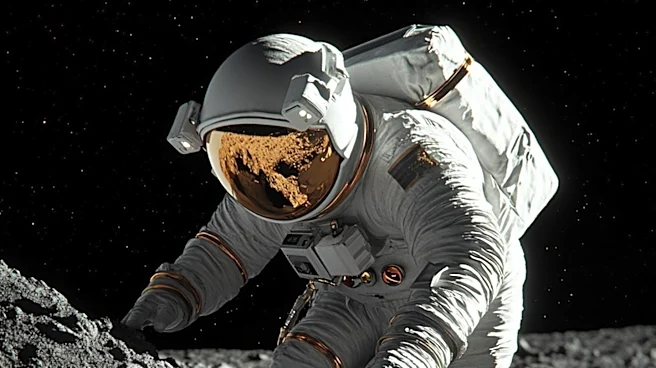
NASA is investigating the use of americium-241 radioisotope heat sources integrated into extravehicular activity (EVA) suits to provide astronauts with continuous warmth during lunar missions. This initiative, known as EARENDIL, aims to address the challenges
posed by the extreme cold of permanently shadowed regions and the lunar night. The project seeks to enhance astronaut safety and mission flexibility by providing a reliable heat source independent of external power. The study will evaluate the technical and safety feasibility of this concept, focusing on thermal modeling, health physics, and systems integration.
Why It's Important?
The development of wearable radioisotope thermal systems could significantly impact NASA's lunar exploration efforts, particularly under the Artemis program. By enabling extended operations in harsh environments, this technology could facilitate scientific research and resource utilization in previously inaccessible areas. It also aligns with NASA's goals for sustainable exploration on the Moon and Mars, potentially reducing reliance on heavy battery systems and enhancing crew safety during power failures. The successful implementation of this technology could redefine thermal management in human spaceflight.
What's Next?
If the feasibility study proves successful, NASA may proceed with further development and testing of the EARENDIL concept. This could involve collaborations with industry partners and integration into future lunar missions. The project may also inform the design of future astronaut systems, incorporating nuclear technologies for resilience and redundancy in extreme environments. Continued advancements in this area could support NASA's broader ambitions for long-term human presence on the Moon and beyond.