







What's Happening?
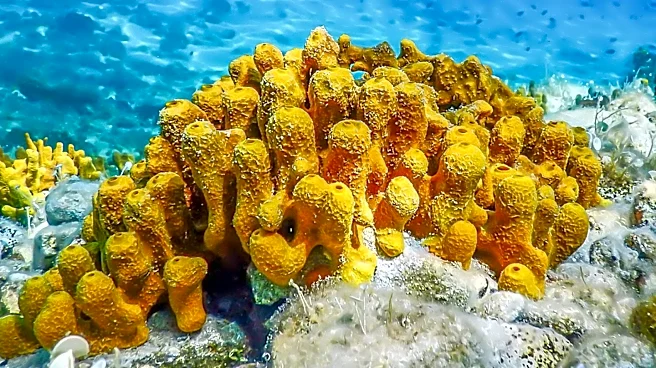
A recent study conducted in Marina Palamós on Spain’s Costa Brava has highlighted the potential of sea sponges, specifically the chicken liver sponge (Chondrosia reniformis), in bioremediation efforts for polluted harbors. Researchers, led by sponge biologist
Manuel Maldonado from the Spanish National Research Council, transplanted various sea sponge species into the harbor's contaminated waters. Over a 15-month period, while most other species perished, nearly 92% of the chicken liver sponge specimens not only survived but some even reproduced asexually. The unexpected arrival of red starfish in the area, which typically indicates healthier marine environments, further suggests the positive impact of these sponges. This research builds on the understanding that sea sponges, ancient ecosystem engineers, can filter large volumes of water, cycle nutrients, and enhance biodiversity by attracting other marine life.
Why It's Important?
This discovery holds significant implications for environmental conservation and the restoration of marine ecosystems globally, including potentially in U.S. coastal areas. Harbors are among the most disturbed marine environments due to pollution from rubbish, oil, invasive species, and noise. The ability of chicken liver sponges to thrive and potentially clean these harsh conditions offers a natural, cost-effective alternative or supplement to current pollution management technologies. If these findings can be replicated in diverse harbor environments, it could lead to new strategies for improving water quality and supporting marine biodiversity in U.S. ports and coastal regions. This could benefit industries reliant on healthy marine environments, such as fishing and tourism, and contribute to broader ecological health.
What's Next?
Researchers plan to continue monitoring the transplanted sponges over several years to further understand their long-term effects and interactions with pollutants. Maldonado and his team suspect the chicken liver sponge's resilience is due to its diverse microbiome, which allows it to process ammonium from seawater. Future research will focus on investigating this microbial mechanism. Additionally, Maldonado has proposed a project to combine sponges with other powerful filter feeders, such as oysters, to explore more comprehensive bioremediation solutions. While the study's localized nature means more research is needed to determine if these sponges can survive in different environments, such as U.S. harbors, the initial success paves the way for broader applications and further scientific inquiry into marine organism-based pollution management.
Beyond the Headlines
The study underscores a broader shift in environmental science towards biomimicry and leveraging natural solutions for complex ecological problems. For decades, the focus has often been on technological fixes for pollution, but this research highlights the untapped potential of marine organisms. The long evolutionary history of sponges, having survived multiple mass extinctions, suggests they possess inherent mechanisms to cope with environmental challenges. This perspective encourages a re-evaluation of less charismatic marine species, like sponges, which often receive less funding and attention compared to more visually appealing organisms like corals, despite providing more extensive ecosystem services. The ethical implication is a call to invest more in understanding and utilizing the natural 'toolkits' developed by marine life for ocean health.