








What's Happening?
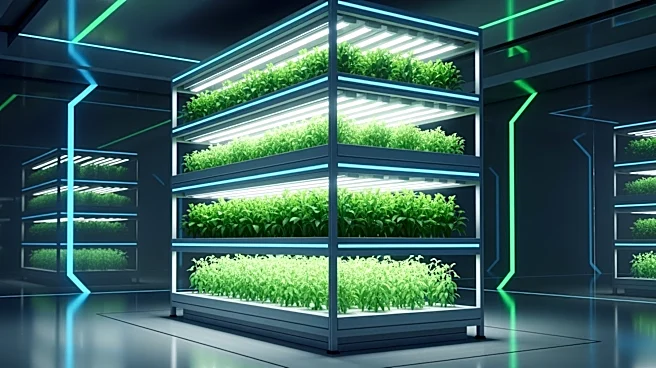
A vertical farm in Chengdu, China, developed by the Institute of Urban Agriculture of the Chinese Academy of Agricultural Sciences, is setting new standards in agricultural productivity. The facility, which covers just 100 square meters, can produce up
to 50 metric tons of lettuce annually. The farm utilizes advanced technology to control light, temperature, water, nutrients, and air, with the entire process managed by robots. This high-tech approach allows for a growth cycle of just 30 to 35 days, significantly faster than traditional methods. The vertical farm's yield per unit area is up to 120 times that of conventional farming.
Why It's Important?
The success of the Chengdu vertical farm highlights the potential of high-tech agriculture to address food security challenges. By significantly increasing yield and reducing growth time, vertical farming can contribute to more sustainable food production. This method also minimizes the use of pesticides and chemical additives, offering a cleaner alternative to traditional farming. As urban populations grow, vertical farming could play a crucial role in meeting food demands while reducing the environmental footprint of agriculture. The technology-driven approach also opens up new opportunities for innovation in the agricultural sector.
Beyond the Headlines
The development of vertical farming technology raises important questions about the future of agriculture. While the benefits are clear, the high operating costs, particularly for electricity, remain a challenge. The reliance on artificial lighting and temperature control accounts for a significant portion of expenses. As the technology evolves, finding ways to reduce these costs will be essential for widespread adoption. Additionally, the shift towards automated farming could have implications for employment in the agricultural sector, necessitating new skills and training for workers.