




What's Happening?
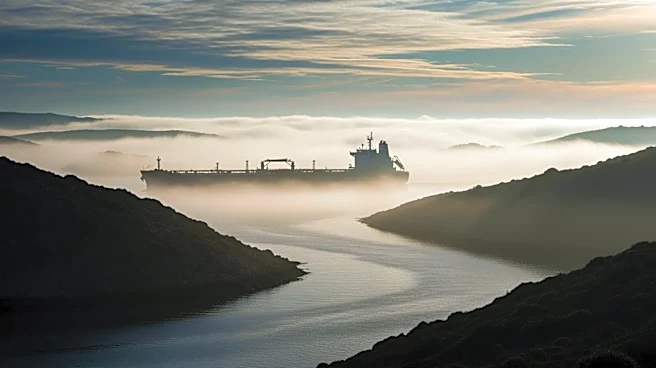
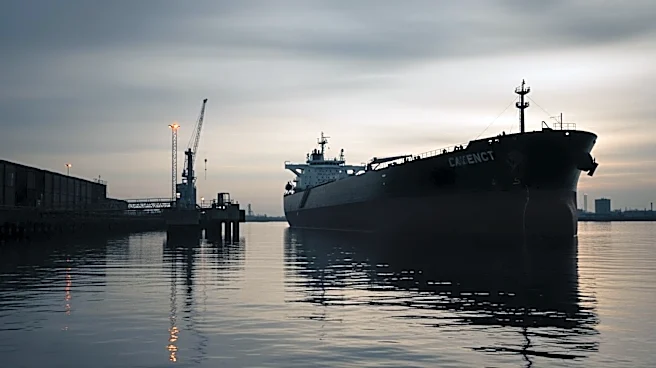
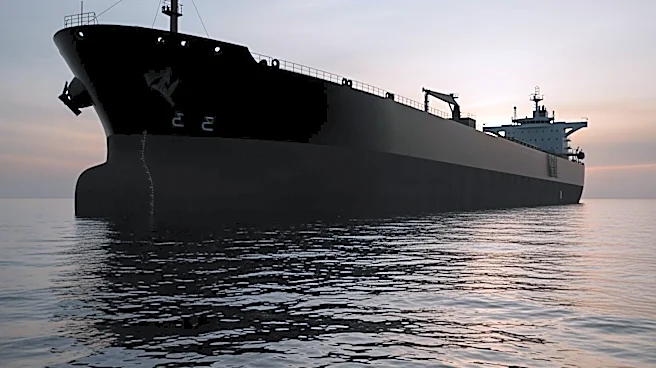
The United States has conducted another maritime interdiction, targeting a stateless tanker in the Indian Ocean. The U.S. Indo-Pacific Command (INDOPACOM) reported the boarding of the tanker identified as Davina, although it is listed in most databases
as Lenore. The vessel, which falsely claimed registry in Curacao and previously under the flag of Palau, was sanctioned by the U.S. in October 2024 for its involvement in the Iranian oil trade. The tanker was reportedly attempting to conceal itself approximately 20 miles southwest of Sri Lanka. According to TankerTrackers.com, the vessel is currently transporting 1.9 million barrels of Iranian crude oil, loaded on March 20 at Kharg Island, and has transported about 20 million barrels since 2024. This operation marks the third stateless tanker seized by INDOPACOM since mid-April, following the interdictions of the Tifani and Majestic X.
Why It's Important?
This interdiction underscores the U.S. commitment to enforcing sanctions against Iran, particularly in the maritime domain. By targeting vessels involved in the Iranian oil trade, the U.S. aims to disrupt illicit networks and enforce compliance with its sanctions regime. The operation highlights the strategic importance of the Indian Ocean as a critical route for oil transportation and the U.S.'s role in maintaining security and stability in the region. The seizure of the Davina also reflects broader geopolitical tensions, as the U.S. continues to exert pressure on Iran while ensuring that its sanctions are effectively implemented. This action could have significant implications for global oil markets and international relations, particularly in how countries navigate the complexities of U.S. sanctions.
What's Next?
The U.S. is likely to continue its maritime enforcement operations to prevent the transport of Iranian oil, potentially leading to further interdictions. This could provoke responses from Iran and other stakeholders involved in the oil trade, possibly escalating tensions in the region. The U.S. may also engage in diplomatic efforts to strengthen international support for its sanctions regime. Additionally, the ongoing interdictions could impact global oil supply chains, prompting countries to reassess their energy strategies and alliances. The situation may also influence future U.S. foreign policy decisions regarding Iran and its regional activities.