



What's Happening?
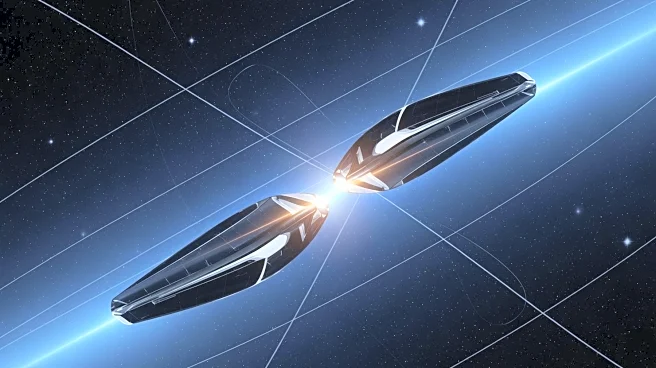
SpaceX has reported a near-collision between one of its Starlink satellites and a Chinese satellite, missing by approximately 200 meters. The incident occurred in low Earth orbit (LEO) and involved STARLINK-6079 and a satellite from a Chinese launch.
SpaceX's engineering vice president, Michael Nicolls, emphasized that the issue was not merely 'bad luck' but a failure in coordination and data sharing between satellite operators. The Chinese satellite was part of a launch from the Jiuquan Satellite Launch Center, which included multiple international payloads. SpaceX criticized the lack of shared ephemeris data, which is crucial for predicting satellite trajectories and avoiding collisions. The event has sparked discussions about the need for improved coordination as the number of satellites in orbit continues to grow.
Why It's Important?
The near-miss incident underscores the increasing congestion in low Earth orbit, where thousands of satellites are being launched, raising the risk of collisions. Such events could lead to the creation of space debris, which poses a threat to other satellites and space operations. The situation highlights the need for better coordination and data sharing among satellite operators to prevent potential collisions. SpaceX's call for improved orbital safety measures is significant as it operates the largest satellite constellation, Starlink, which frequently performs collision-avoidance maneuvers. The incident also draws attention to the broader issue of space governance, as there is currently no centralized system for managing satellite traffic, unlike air traffic control in aviation.
What's Next?
The incident has prompted calls for the development of more robust coordination mechanisms among satellite operators. As the number of satellites in orbit continues to increase, the industry and governments may need to establish enforceable rules and standards for data sharing and collision avoidance. Both SpaceX and the Chinese launch provider have expressed interest in improving future coordination. The challenge will be to create a system that can handle the growing number of satellites and prevent near-misses from turning into actual collisions. The focus will be on whether major operators can share the necessary data quickly enough to ensure orbital safety.
Beyond the Headlines
The near-collision event highlights the potential for 'Kessler syndrome,' a scenario where cascading collisions create a debris field that could render parts of orbit unusable. This incident serves as a reminder of the need for international cooperation and the establishment of a global framework for space traffic management. The growing number of satellites also raises ethical and legal questions about the responsibility of operators to ensure the safety of their spacecraft and the broader space environment. As space becomes more commercialized, the pressure to address these issues will likely increase.