



What's Happening?
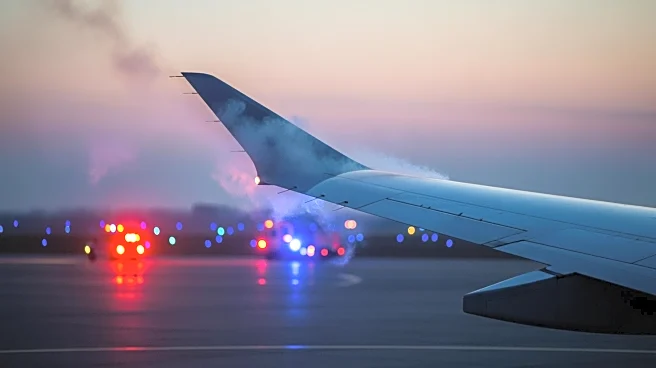
Passengers aboard a LATAM Airlines flight experienced a terrifying ordeal when their aircraft was engulfed in smoke on the tarmac of São Paulo’s Guarulhos International Airport. The incident occurred as Flight LA3418 was preparing to depart for Porto
Alegre. The fire originated from a baggage conveyor attached to the Airbus A320, which caught fire and sent smoke billowing into the plane. Despite the alarming situation, all 169 passengers were safely evacuated without injuries. Dramatic footage showed the plane surrounded by dark smoke, with passengers lining up in the smoky cabin as crew members facilitated their evacuation. Emergency slides were deployed, and fire crews quickly extinguished the flames. The fire was linked to equipment belonging to a subcontractor responsible for loading cargo onto the aircraft.
Why It's Important?
This incident highlights the critical importance of safety protocols and emergency preparedness in aviation. The successful evacuation of all passengers without injury underscores the effectiveness of the airline's emergency response procedures. It also raises concerns about the safety and maintenance of ground equipment used in airport operations. For the aviation industry, ensuring the reliability and safety of subcontracted services is crucial to prevent similar incidents. The event may prompt airlines and airport authorities to review and enhance their safety measures and equipment maintenance protocols to safeguard passengers and crew.
What's Next?
In the aftermath of the incident, LATAM Airlines and airport authorities are likely to conduct thorough investigations to determine the exact cause of the fire and assess the safety of the equipment involved. This may lead to stricter regulations and oversight of subcontractors providing ground services at airports. Additionally, the airline may review its emergency procedures and training to ensure continued passenger safety. The incident could also prompt other airlines to re-evaluate their safety protocols and equipment maintenance practices to prevent future occurrences.