




What's Happening?
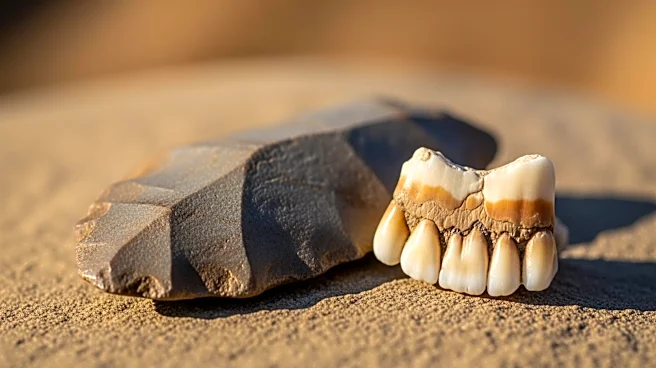
A recent study published in PLOS One suggests that Neanderthals may have performed a form of dental procedure akin to a root canal 59,000 years ago. Researchers discovered a Neanderthal molar in Chagyrskaya Cave, Siberia, with a hole that appears to have been
drilled using a stone tool. This finding indicates that Neanderthals might have had the knowledge and dexterity to perform such precise dental work. The study involved micro-CT scans and electron microscopy to analyze the tooth, revealing grooves consistent with intentional drilling. This discovery adds to the understanding of Neanderthal capabilities, suggesting they possessed advanced skills and social cooperation.
Why It's Important?
The potential evidence of Neanderthals performing dental procedures challenges previous perceptions of their cognitive abilities and social structures. This finding suggests that Neanderthals were capable of complex problem-solving and had a level of manual dexterity previously not attributed to them. It also implies a degree of social cooperation, as such procedures would require trust and understanding between individuals. This discovery contributes to the broader narrative of Neanderthals as intelligent and adaptable beings, capable of responding to health challenges in ways similar to modern humans.
Beyond the Headlines
The implications of this study extend beyond the immediate findings, prompting a reevaluation of Neanderthal culture and capabilities. It challenges the stereotype of Neanderthals as primitive and highlights their potential for innovation and adaptation. This discovery may lead to further research into other aspects of Neanderthal life, such as their social structures, health practices, and interactions with their environment. It also raises questions about the transmission of knowledge and skills within Neanderthal communities, suggesting a more complex societal organization than previously understood.