










What's Happening?
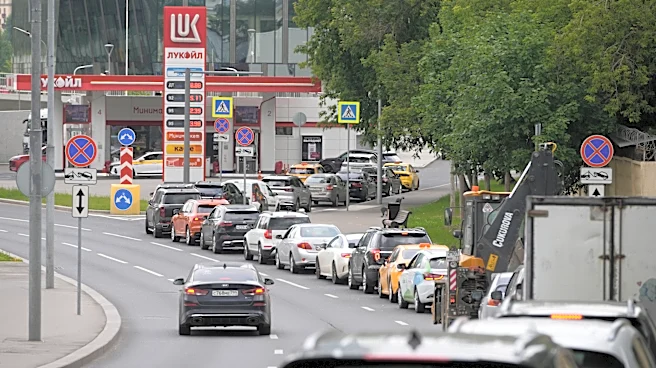
Russia is experiencing a severe fuel shortage due to Ukrainian drone strikes that have significantly impacted its oil refining capacity. The ongoing conflict in Ukraine, coupled with the agricultural harvesting season, has exacerbated the situation, leading
to long lines at petrol stations and dry pumps in some areas. The Russian government is attempting to manage the crisis by rerouting supplies, maintaining price caps, and enforcing export bans. Despite these efforts, public anxiety is growing, and there is a sense of uncertainty about the future. Russian President Vladimir Putin has acknowledged the crisis but insists it is under control, while Ukrainian President Volodymyr Zelenskyy has authorized a military and intelligence campaign to pressure Russia.
Why It's Important?
The fuel shortage in Russia has significant implications for both the domestic and international landscape. Domestically, the crisis could lead to increased transportation costs and higher prices for goods and services, affecting the Russian economy and public sentiment. Internationally, the situation highlights the vulnerabilities in Russia's energy infrastructure and the potential for further escalation in the Ukraine conflict. The crisis also underscores the strategic importance of energy security and the impact of military actions on critical infrastructure. As Russia seeks to import fuel from neighboring countries and Asian markets, the situation could influence global oil prices and trade dynamics.
What's Next?
Russia is likely to continue seeking fuel imports to mitigate the domestic shortfall, with plans to import significant quantities of petrol monthly. The government may also implement further measures to stabilize the situation, such as loosening fuel-quality regulations and prioritizing fuel allocations for essential sectors like agriculture. The effectiveness of these measures will depend on the ongoing conflict and the ability of Russian authorities to manage public dissatisfaction. Additionally, the international community will be closely monitoring the situation, as it could have broader implications for global energy markets and geopolitical stability.